SYSTEMS THINKING!
SYSTEMS THINKING FOR TOK TEACHERS
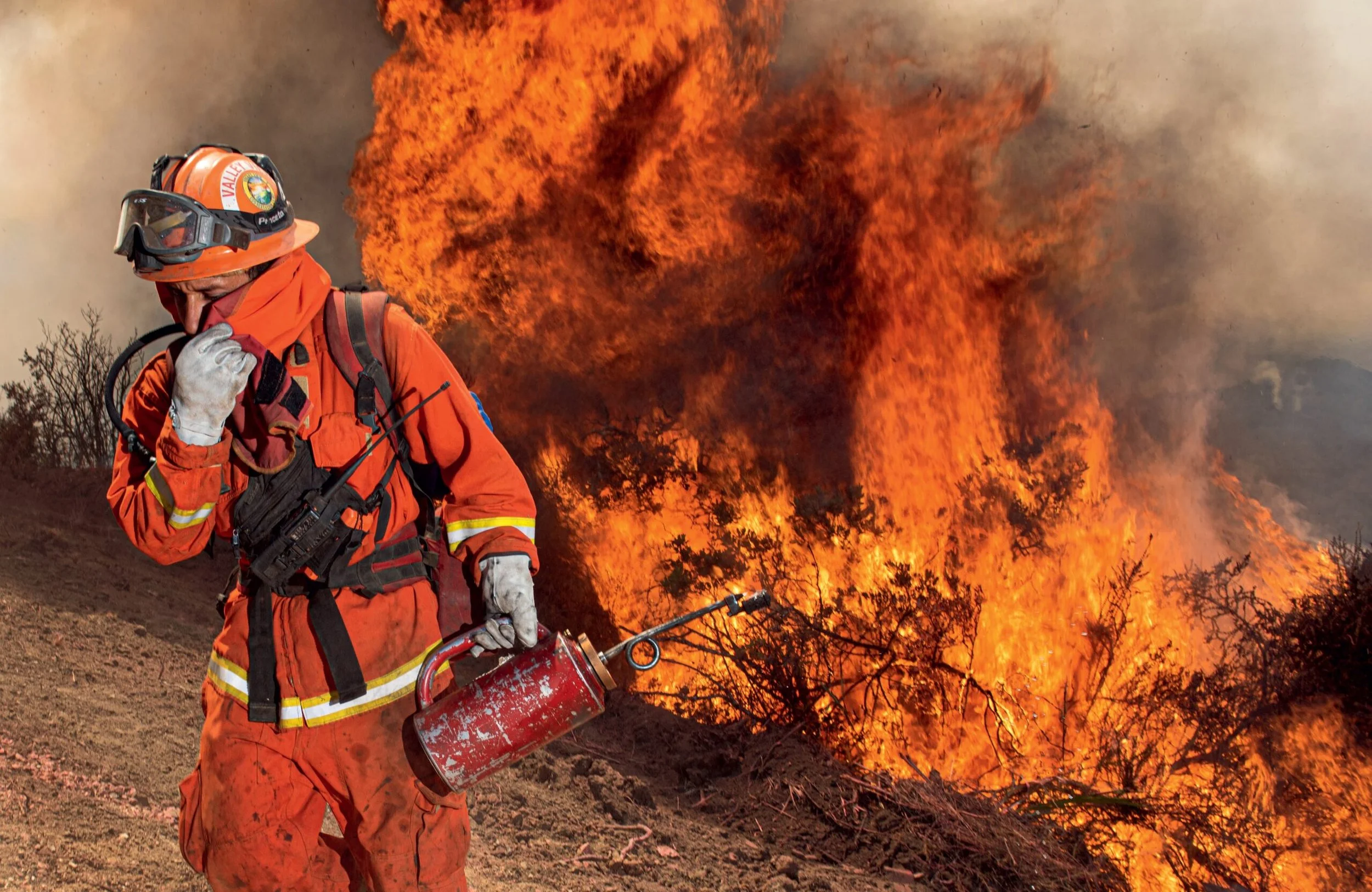
Soberanes wild fire, California, August 3, 2016.
Photo credit: James Balog
SANTA FE INSTITUTE
As curious thinkers and educators in the various academic domains, we are already taking a holistic, interdisciplinary approach to complex systems. We know that the whole can be much greater than the sum of its parts. That much is a given—a truism. But what else is going on?
Let’s take a deeper dive and decide for ourselves how systems thinking might elevate our teaching. Let’s give ourselves permission to break the fourth wall here and gain some meta-perspective. A bold entry point is an encounter with the Santa Fe Institute—the world’s academic epicenter for what’s new in complexity thinking.
The game is on!
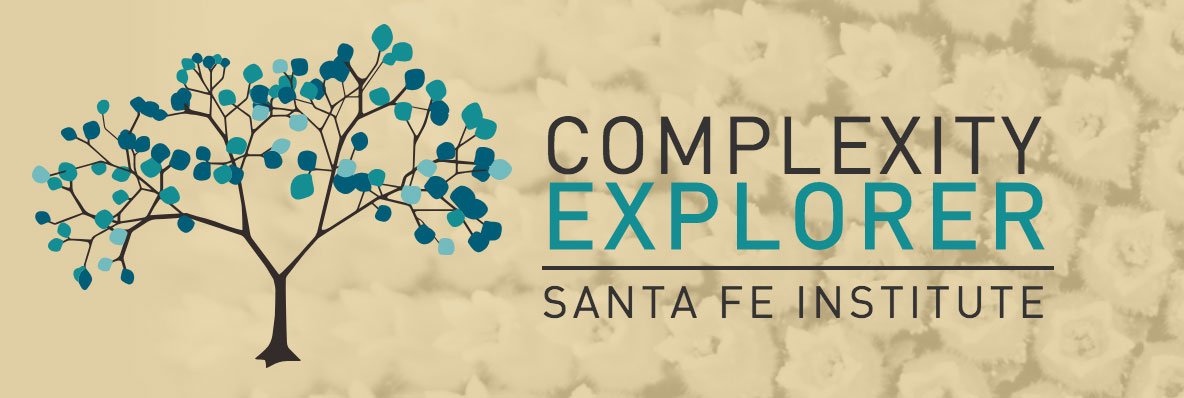
Located in New Mexico, the Santa Fe Institute is the world's leading research center for complex systems science. The institute was founded in 1984 by eminent academics in multple disciplines including Murray Gell-Mann, Nobel Prize winner for introducing the concept of quarks as the fundamental building blocks of strongly interacting subatomic particles.
The following quotation from David Krakauer, the current President, encapsulates frontier complexity thinking. It merits a close reading.
“It has been the great triumph of the sciences to find consistent means of studying phenomena hidden by both space and time, overcoming the limits of cognition and material culture. To hide in space means that phenomena lie beyond the scope of our everyday senses because they are either too small or too distant to be detected without amplification. Things can be hidden in time by being too fast for us to perceive or too slow for a single lifetime to encompass.
The scientific method is the portmanteau of instruments, formalisms, and experimental practices that succeed in discovering basic mechanisms despite the limitations of individual intelligence.
There are, however, on this planet, phenomena that are hidden in plain sight. These are the phenomena that we study as complex systems: the convoluted exhibitions of the adaptive world — from cells to societies. Examples of these complex systems include cities, economies, civilizations, the nervous system, the Internet, and ecosystems.
Paradoxically, the complex world is one that we can, in many senses, perceive and measure directly. Unlike distant stars or nearby minerals that require a significant increase in optical capability to arrive at insights into their elementary properties, behavior — both individual and collective — seems to present itself in ways that can be investigated rather modestly through observation or experiment.
But the way in which complex phenomena are hidden, beyond masking by space and time, is through nonlinearity, randomness, collective dynamics, hierarchy, and emergence — a deck of attributes that have proved ill-suited to our intuitive and augmented abilities to grasp and to comprehend.
Over the course of thirty-five years, the Santa Fe Institute has been looking into this proximal, near-invisible reality, working in highly diverse, nondisciplinary teams to invent new concepts to render up complex reality to science; searching for order in the complexity of evolving worlds.
”
“INTRODUCTION TO COMPLEXITY”— FREE ONLINE COURSE AT THE SANTA FE INSTITUTE
This “always available” course at the institute’s Complexity Explorer is engaging and discombobulating. It shifted paradigms in my own thinking, and I was immediately struck by its relevance to TOK.
Here is the Introduction to Complexity course description and sign up.
TWO BOOK RECOMMENDATIONS
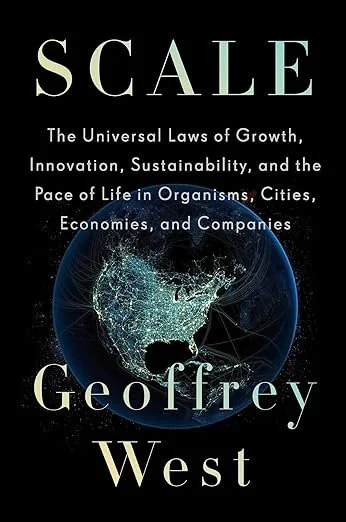
Geoffrey West is a distinguished professor, and former President, of the Santa Fe Institute. The full title of his celebrated book on Scale reveals its astonishing scope. West is a theoretical physicist renowned for his research on allometric scaling in biology. This includes the astonishing fact that—due to correlations between body mass, metabolic rate and lifespan—all mammals (from pygmy shrews to blue whales, including humans in between) have approximately the same number (1.5 billion) of heart beats in a typical lifetime. No spoilers here; but later in the book we discover why companies tend to fail, while cities prevail!
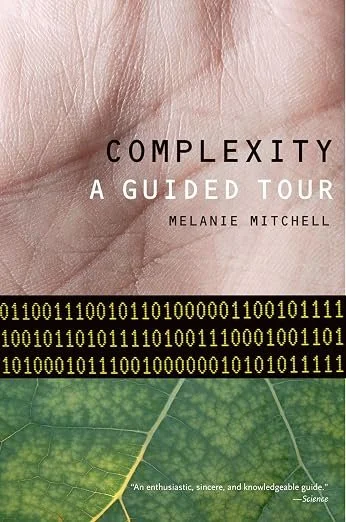
Melanie Mitchell (2009) Complexity: A Guided Tour. Oxford University Press
Melanie Mitchell is a Santa Fe Institute professor who works on conceptual abstraction, analogy-making, and visual recognition in AI systems. She instructs the online Introduction to Complexity course at the Santa Fe Institute. As she does in the online course, Mitchell begins with an exploration of self-organization in ant colonies. This is a compelling and accessible introduction to systems thinking that I have appropriated as a TOK class activity.
In her book Mitchell takes us on a journey of emergence, networking and ever-evolving complexity, encompassing stock markets, immune systems, developing brains, power outages, the internet, disease outbreaks, and AI!
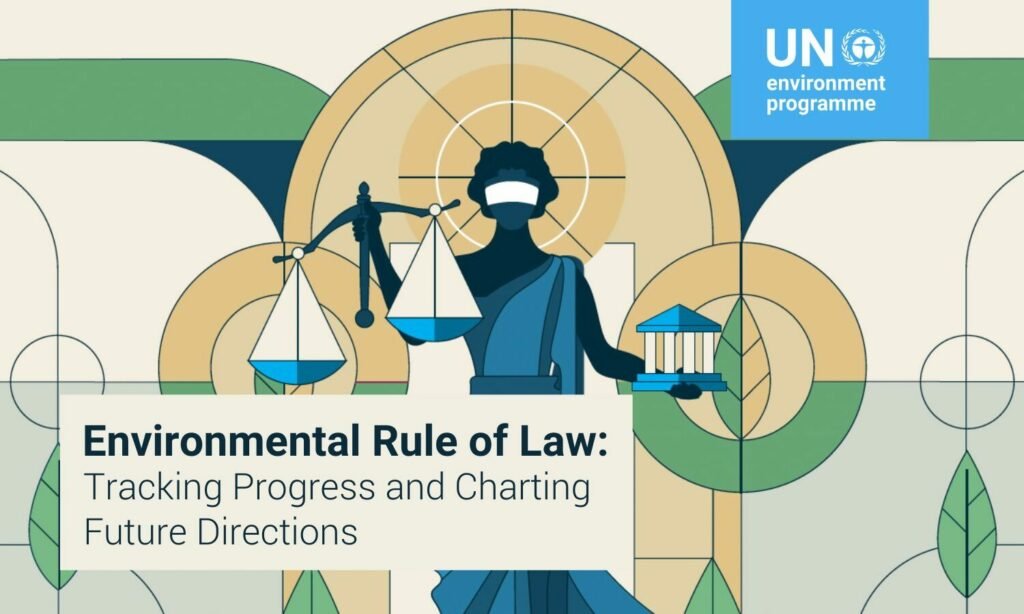
Evoking the spirit of the new IB Environmental Systems and Societies Higher Level course, here is the cover imagery of the United Nations Environmental Rule of Law Report, 2023
SYSTEMS THINKING IS ALREADY A KEY ELEMENT IN IB CURRICULUM DEVELOPMENT
Since the pandemic and a surge in global climate awareness—led by younger advocates like Greta Thurnberg—there has been increased demand for Environmental Systems and Societies (ESS) as an IB subject. ESS pioneered an interdisciplinary, systems and case studies approach. In 2024 its legitimacy was raised a notch further when it became a HL subject, featuring advanced environmental law, ethics, and economics.
Also in 2024 , Design Societies replaced Information Technology in a Global Society (ITGS). Moving away from its previous main focus on coding, the new course embraces digital systems, data, and artificial intelligence. It explores how social media shapes human lives, communities, and global policies.
—Systems Transformation Pathway—
Systems Transformation Pathway is a pilot interdisciplinary course worth two SL subjects. Students work collaboratively investigating complex systems, to develop meaningful, practical responses to real-world issues in their local communities. The initial pilot phase involved four experienced IB schools: UWC Atlantic, the United World College of South East Asia, Upper Canada College, and Mulgrave School. In July 2026 the IB Board announced a wider pilot initiative involving 20 additional schools, which will be followed by a global offering in 2030.
The 'why' of systems thinking and the 'now what' of transformative change!
The following quote from Olli-Pekka Heinonen, IB Director General, suggests that systems thinking is likely to become more explicit in IB curriculum development at all levels. Presumably, this will include future iterations of TOK.
“Graduates of this new IB Diploma Pathway will leave UWC Atlantic uniquely empowered. They’ll learn how to organise at scale and address systemic challenges, balancing the ‘why’ of systems thinking and the ‘now what’ of transformative change, inspired to secure a just future for our people and the planet. This collaboration between the IB and UWC Atlantic is vital in paving the way for the future of the IB Diploma Programme more generally”

Source: KAL’s cartoon in the Economist—August 6, 2026. Visit Kaltoons official site.