
AREAS OF KNOWLEDGE:
THE NATURAL SCIENCES
ENCOUNTER WITH NATURE JOURNAL
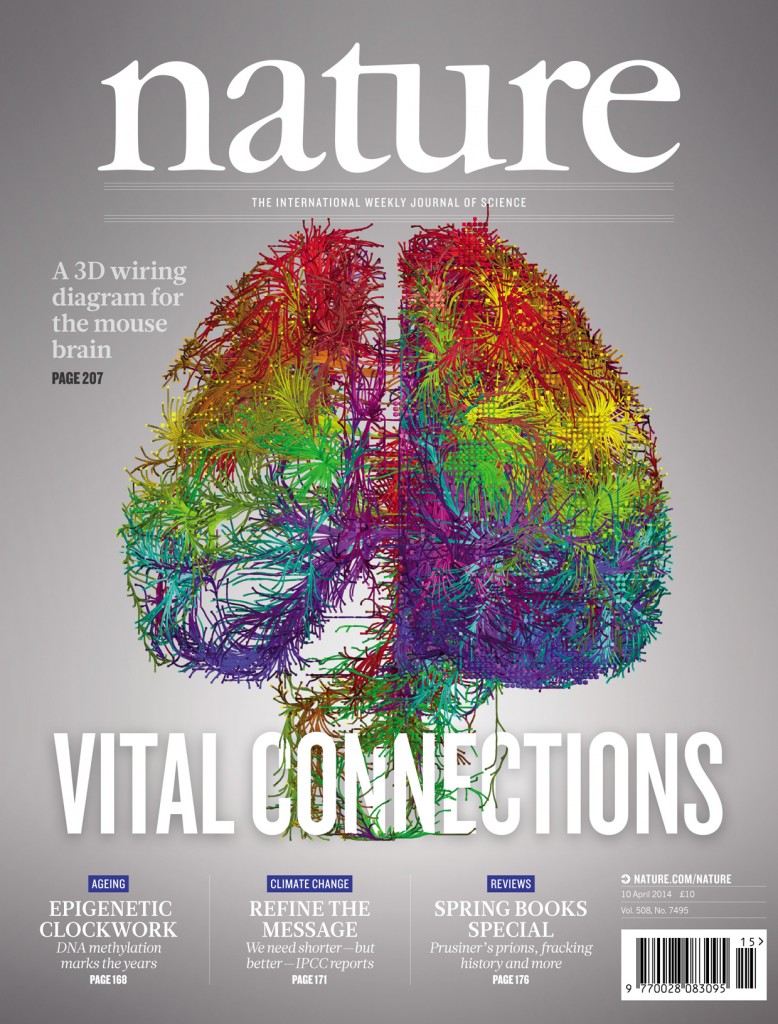
This unit hinges on obtaining a class set of back copies of Nature, the prestigious weekly science journal.* The activity would not work by substituting a popular science news magazine like New Scientist or Scientific American.
“Articles” and “Letters” submitted to Nature are pristine, full-blown, peer-reviewed scientific papers that must push the frontiers of scientific knowledge. Unlike the news content at the front end of the journal, Nature Articles and Letters are invariably specialized and highly technical.
*If you don’t have access to recent physical copies of the Nature journal — fear not. Print out copies of the six Open Access Nature Articles below!
GETTING STARTED
To provide some context, initiate some conversation around the discovery of the structure of DNA. This topic is central to IB Biology and Chemistry (and also encompasses some interesting Physics).
It is very likely that individual students will air strong views about the role of Rosalind Franklin’s X-ray crystallography images; nearly all will have seen Watson and Crick's iconic model.
Well before the to and fro discussion about the controversy is exhausted, put discussion on hold and announce a short, individual reading assignment. Pass out facsimile copies of Watson and Crick’s landmark Molecular Structure of Nucleic Acids: A Structure for Deoxyribose Nucleic Acid published in Nature on April 25, 1953. Printable Pdf.
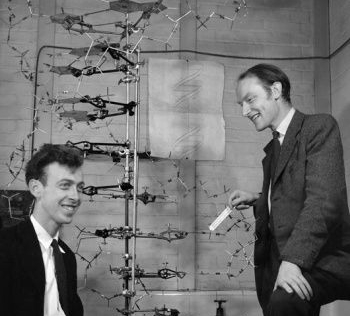
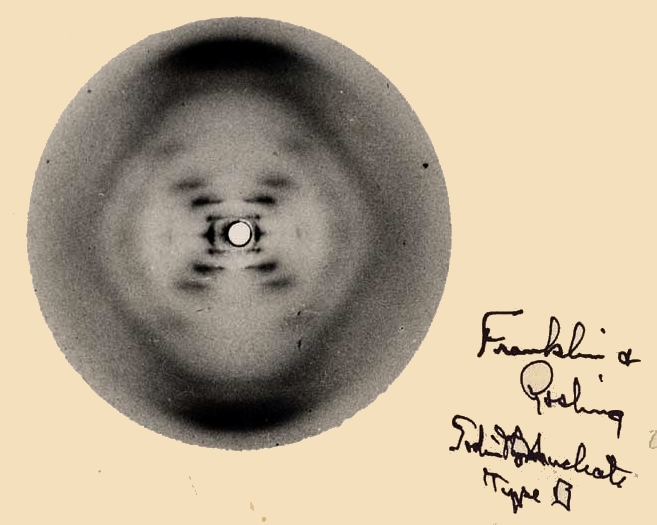
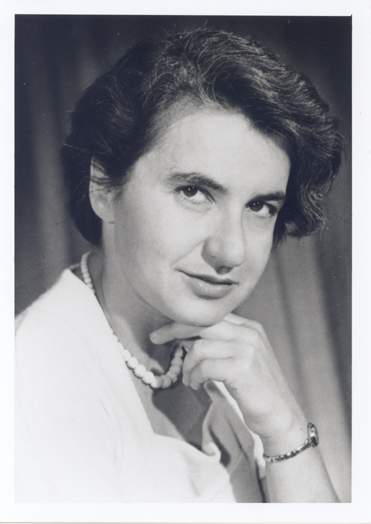
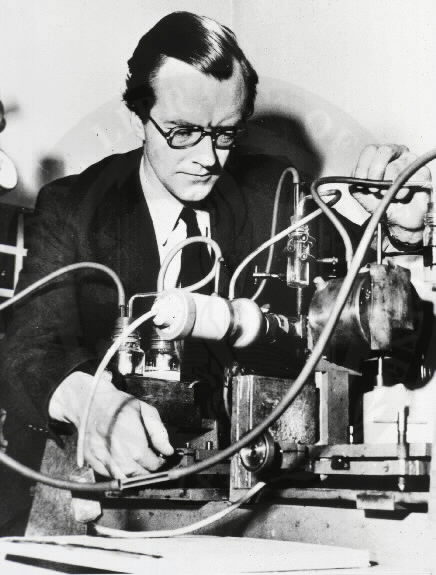
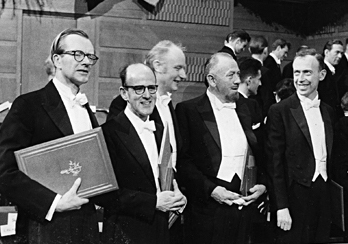
Next, show the slideshow. Highlight Rosalind Franklin and her celebrated "Photo 51." Point out novelist John Steinbeck in the 1962 Nobel Prize line up. If it did not come up before; this is where Franklin's death from cancer, and the Nobel Prize rule about not making awards posthumously, should be revealed. The TED Ed cartoon video is a fair encapsulation. Students should be invited to look back at their copies of the 1953 facsimile to confirm the presence of the Franklin and Wilkins contribution.
GUIDING QUESTIONS
Watson and Crick declare in their opening sentence, “This structure has novel features which have considerable biological importance.” With all the benefit of hindsight, assess whether Watson and Crick were fully aware of the significance of their discovery? Could they have been joking?
Did you understand all or most of Watson and Crick’s paper?
In your view did Watson and Crick do any science?
What is the relationship between Experimentalists and Theorists in the Natural Sciences?
CLASS ACTIVITY I—
GETTING PUBLISHED IN NATURE
Next, students obtain further context by reading the policy for publication and peer review at "Getting Published in Nature: The Editorial Process" at the Nature website, or from a downloaded pdf. At this juncture physical copies of Nature should be distributed to the class.
Students spend 15 minutes reading their copy of the journal. Everybody should read or attempt to read:
1. The Nature’s mission (See inside front cover)
2. Several items from “News in Brief”
3. A single page advertisement
4. A full-sized “Article” or “Letter”
Next students should form pairs and spend a timed 8 minutes addressing the following questions:
What are your first impressions?
How much of what you just read could you understand? What are the essential differences between Watson and Crick's 1953 paper and the much more recent “Article” or “Letter” that you attempted to read?
What are the essential differences between what you read in Nature and the science presented in the text book used in your IB science class?
What are the advantages and disadvantages of extreme specialization in the various branches of science? Do your conclusions apply to other Areas of Knowledge?
CLASS ACTIVITY II—
JUST FOR FUN!
To conclude this session, an edible prize is offered to the pair of students who can find, and submit on a piece of paper, the most hermetic, difficult, technical and obscure sentence found in their set of Nature journals. A light-hearted class vote should decide the winners. Sample previous winners are presented below.
ARCANE SENTENCES
HASTILY CHOSEN FROM NATURE
Neither jargon nor deliberate obfuscation, but a precise, detailed, objective, highly specialized vernacular in subject areas only fully understandable by “initiated” specialists in the field…
“The total magnitude of the spin signal, obtained by integrating the spectrum in Fig. 4a, was found to be { [ Δf 1 (t)] 2} = 28mHz 2. Using this experimental value and the relationship { [ Δf 1 (t)] 2} = ( 4/ π) 2 { δ f c} 2 [ {A(t)} 2], we solve for { δ f c} using the assumption that [ {A(t)} 2] = 1. We find { δ f c} = 4.2 mHz, in excellent agreement with the value of 3.7 mHz expected from equation (1).”
From Nature Vol 430: 15, July 2004
“Lung cryosections from K – rasV12 mice stained for senescence-associated β -galactosidase gave an instant signal in the adeomas, whereas the adenocarcinomas gave a weak or negative signal (Fig. 1b).”
From Nature Vol 436: 4, August 2005
“The presence of bonafide appendage on the pycnogonid protocebrum (and the absence of a labrum) gives support to the protocerebral origin of the great appendage and to the idea that the labrum is the remnant of this ancient appendage.”
From Nature Vol 437: 20, October 2005
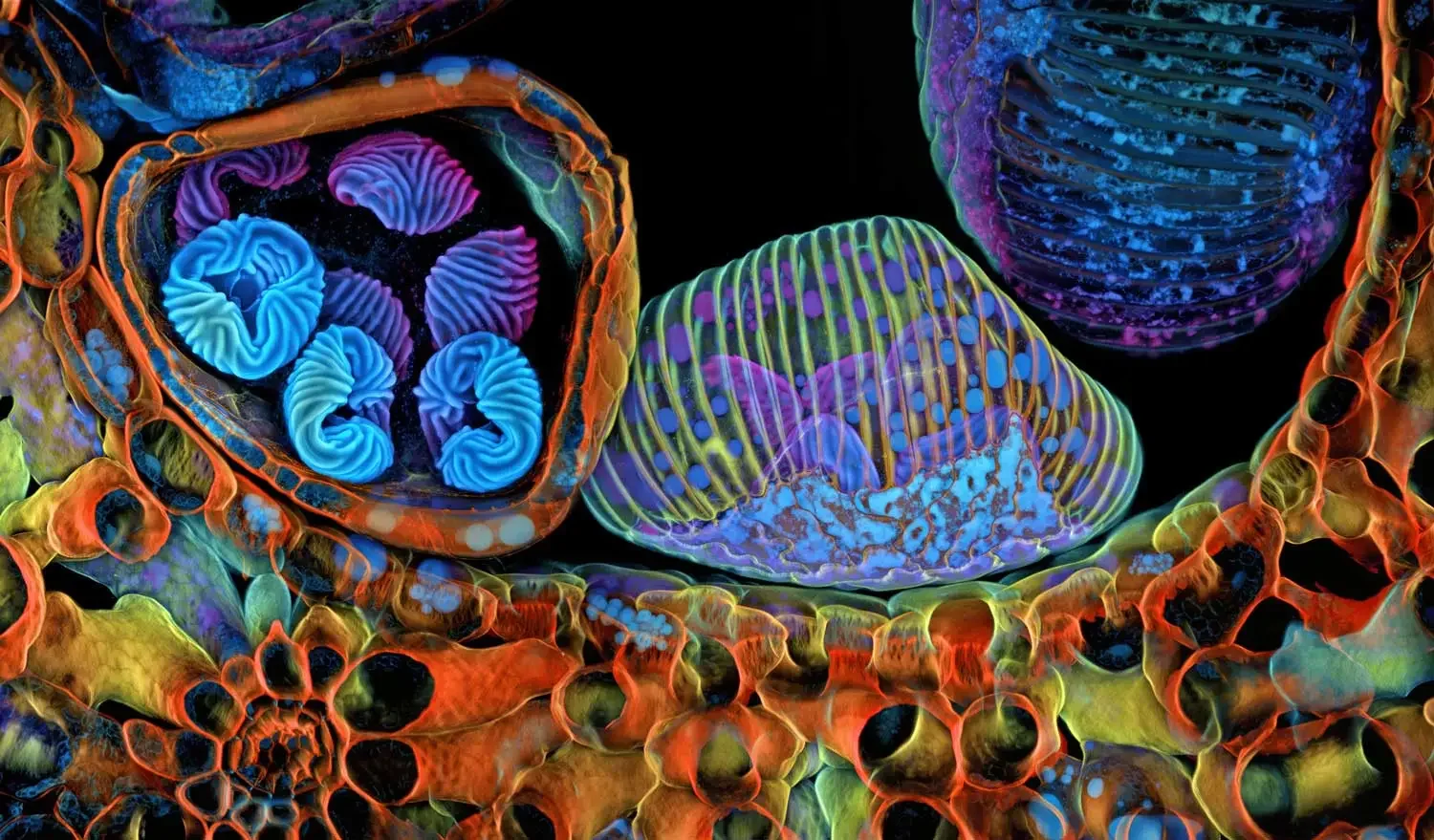
A kaleidoscopic view of reproductive spores of Ceratopteris richardii made possible by the use of fluorescent lasers in a confocal microscope.
Photo credit: Igor Robert Siwanowicz
“First, to serve scientists through prompt publication of significant advances in any branch of science, and to provide a forum for the reporting and discussion of news and issues concerning science.
Second, to ensure that the results of science are rapidly disseminated to the public throughout the world, in a fashion that conveys their significance for knowledge, culture and daily life.”
Six recent Open Access Articles
NATURE ARTICLE ONE
Unavoidable future increase in West Antarctic ice-shelf melting over the twenty-first century
Open Access: 23 October 2023 PDF
Kaitlin A. Naughten, Paul R. Holland, and Jan De Rydt
NATURE ARTICLE TWO
Resolving forebrain developmental organisation by analysis of differential growth patterns
Open Access: December 2025 PDF
Elizabeth Manning Dong WonKim, Seth Blackshaw, Kavitha Chinnaiya, Caitlyn Furley, Marysia Placzek, and Elsie Place
NATURE ARTICLE THREE
Predator selection on phenotypic variability of cryptic and aposematic moths
Open Access: 17 January 2024 PDF
Ossi Nokelainen, Sanni A. Silvasti, Sharon Y Strauss, Niklas Wahlberg, and Johanna Mappes
NATURE ARTICLE FOUR
The redox driven Na+-pumping mechanism in Vibrio cholerae NADH-quinone oxidoreductase relies on dynamic conformational changes
Open Access: 22 January 2026 PDF
Moe Ishikawa-Fukuda, Takehito Seki, Jun-ichi Kishikawa, Takahiro Masuya, Kei-ichi Okazaki, Takayuki Kato, Blanca Barquera, Hideto Miyoshi, and Masatoshi Murai
NATURE ARTICLE FIVE
Urease-powered nanobots for radionuclide bladder cancer therapy
Open Access: 15 January 2024 PDF
Cristina Simó, Meritxell Serra-Casablancas, Ana C. Hortelao, Valerio Di Carlo, Sandra Guallar-Garrido, Sandra Plaza-García, Rosa Maria Rabanal, Pedro Ramos-Cabrer, Balbino Yagüe, Laura Aguado, Lídia Bardia, Sébastien Tosi, Vanessa Gómez-Vallejo, Abraham Martín, Tania Patiño, Esther Julián, Julien Colombelli, Jordi Llop, and Samuel Sánchez
NATURE ARTICLE SIX
Large-scale analogue quantum simulation using atom dot arrays
Open Access: 15 December 2025 PDF
M. B. Donnelly, Y. Chung, R. Garreis, S. Plugge, D. Pye, M. Kiczynski, J. Támara-Isaza, M. M. Munia, S. Sutherland, B. Voisin, L. Kranz, Y. L. Hsueh, A. M. Saffat-Ee Huq, C. R. Myers, R. Rahman, J. G. Keizer, S. K. Gorman, and M. Y. Simmons