
SYSTEMS THINKING!
HYPERCOMPLEX AND INTERCONNECTED

Coral reef delicate ecosystem
Photo credit: Island Conservation, Santa Cruz
NO CENTRAL CONTROL
In the Systems Thinking introduction we learned that systems are complex and adaptive. An astonishing revelation—with enormous implications for our understanding of what is really going on the the real world—is the discombobulating notion that there is no central control!
We learned that the system may be “buffeted, constricted, triggered, or driven by outside forces. But the system's response to these forces is characteristic of itself, and that response is seldom simple…”

CLASS ACTIVITY I —
REVISIT BLIND MEN AND THE ELEPHANT
Keep the contents of these opening paragraphs in mind; but resist revealing them to your students before actual engagement with the activities.
The nuances of systems thinking on the human scale are hidden in plain sight. In the class activities that follow students will be invited to make their own connections between the “why?” of systems thinking, and the “now what?” of transformative change. There will be “Aha!” moments, as well as some resistance in the room.
The outcome should be empowering and cathartic for students—the very opposite of feeling overwhelmed and pushed around by alien, existential forces. To suggest just one example: student understanding of current events will be forever enhanced by recognizing the inevitability of emergent, unforeseen consequences, whenever brash, short-term, simplistic decisions are made in the global political arena.
There are no magical solutions when navigating complexity; but a vague, nagging feeling of helplessness might be transformed by gaining some meta-perspective. The power of Knowing can nudge instrumentality and local action.

This is a critical juncture in the TOK course so let’s not rush. We ease in gently by revisiting the Holism vs. reductionism class activity in The parable of the Blind men and the elephant.
WARM UP AND GENERATIVE QUESTIONS
Begin the class by whimsically stating your own version of something like: “Today’s class will be hypercomplex and interconnected. No, really—the actual title of the class is ‘Hypercomplex and interconnected.’ And, do we agree that, as individual human beings, we are all ‘complex adaptive systems?' So, are you with me? Are you feeling hypercomplex and interconnected today?” Repeat the last sentence, like a preacher or team coach, until you get a resounding, energetic, loud “Yes!” notwithstanding any teenage eye-rolling.
Next divide the class into three conversation groups. Ask them to appoint a scribe and spokesperson. Immediately provide each group with a printed version of one of the Knowledge Questions below. Allow a timed three minutes for group discussion.
What insights into knowledge acquisition can be made from the Parable of the Blind Men and the Elephant?
What is holistic thinking? Provide examples.
Reductionism is the practice of explaining complex systems by breaking them down into simpler parts. Provide examples of the spectacular success of reductionism the natural sciences.
After each spokesperson has reported back, continue group discussion with the bonus question below; as well as Stephan Jay Gould’s Battle of Agincourt quote (previously encountered in the Consilience of Knowledge class activity).
Compare the effectiveness of taking a reductive approach in chemistry and psychology.
“We will not explain Agincourt by the physics of the longbow, or September 11 by the neurology of psychopathology.
”
CLASS ACTIVITY II —
BLACK BOX SYSTEMS APPROACH
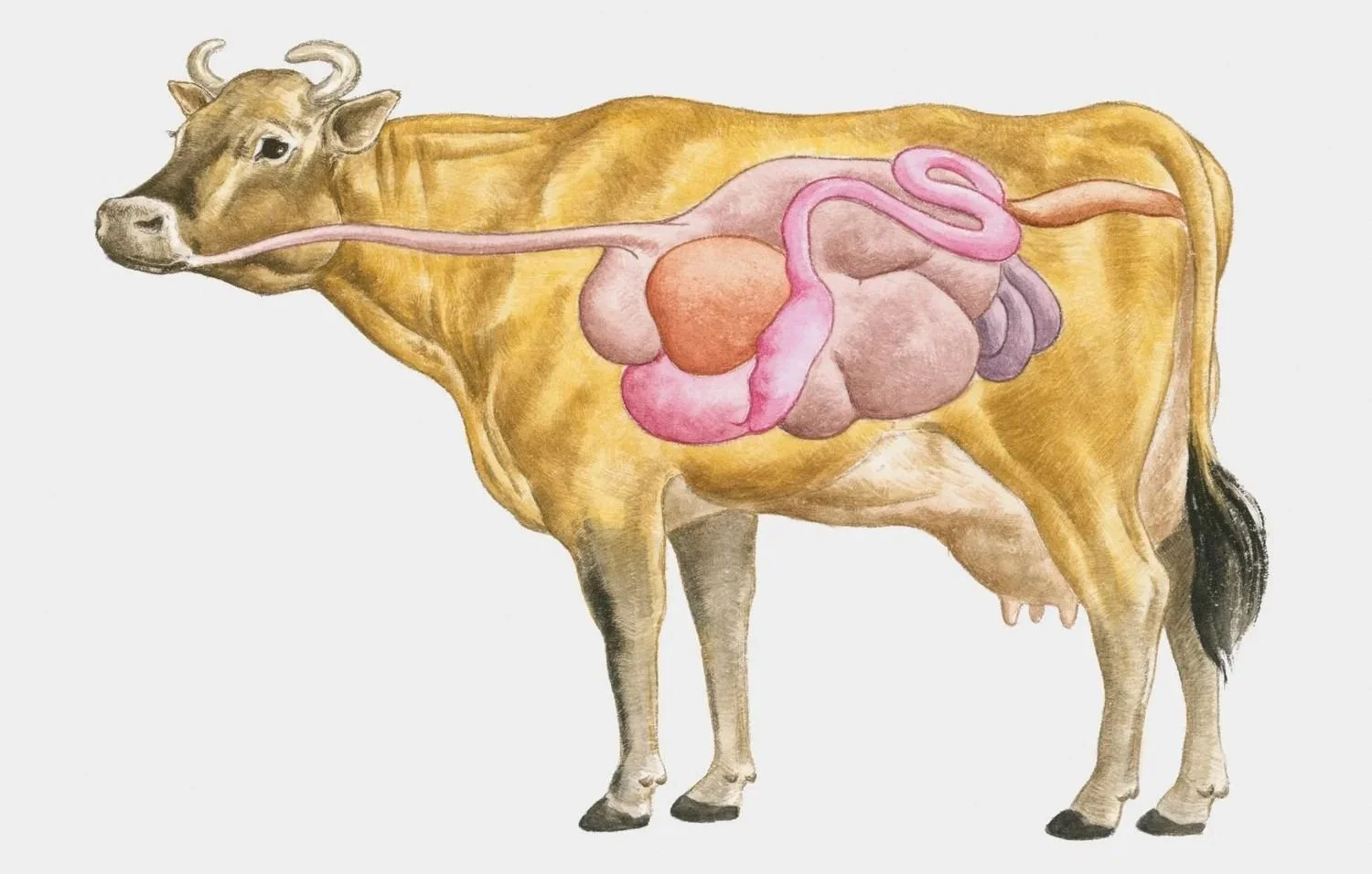
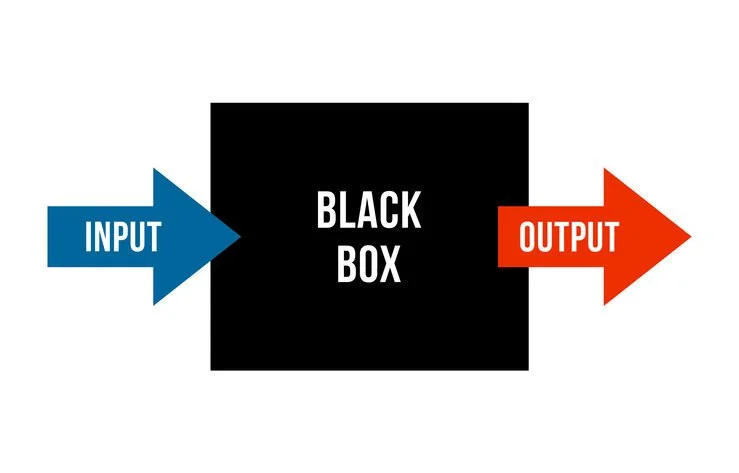
What goes in and what comes out?
Taking a traditional "black box" approach to a complex system is obviously a simplification, but it is a good starting point. Black box models ignore complex internal mechanisms. Instead they “zoom out” to obtain an overview. What counts is what goes in and what comes out? The entire focus is on measurable inputs and outputs. Information is important too. Stimuli go in. Responses come out. The nature of inputs and outputs depends on the nature of the system. Categories like energy, chemical materials, data, wastes, behaviors, services, and products come to mind.
Flows, loops and transformations
ESS and biology students will be familiar with the conventions of using boxes and arrows to identity storages and flows. Negative feedback loops stabilize how systems react to change, Positive loops amplify—often exponentially and destructively.
Simple transfers are not the same as transformations, which are associated with fundamental energy changes. Transformations are reversible or irreversible. They are governed by the Laws of Thermodynamics. Entropy—the tendency towards disorder in our Universe—defines the Arrow of Time.
BRIEF ENCOUNTER WITH SOME COMPLEX SYSTEMS
Begin this class activity by displaying the cow and black box rectangle diagram above. Based on these visual stimuli alone, unleash some introductory class discussion by asking:
What is going on here?
Biology and ESS students will have plenty to say. As the to-and-fro of whole class conversation unfurls, much of the content in the “What goes in and what comes out?” and the “Flows, loops and transformations” paragraphs above, are likely to emerge spontaneously. That’s all good; but the fun really starts if nerdy, student-generated specifics like “Why do cows burp methane? come into play.
Next, project the photosynthesizing figs and sewage plant images. Keep the momentum going by asking the class:
For each of these systems, what goes in and what comes out?
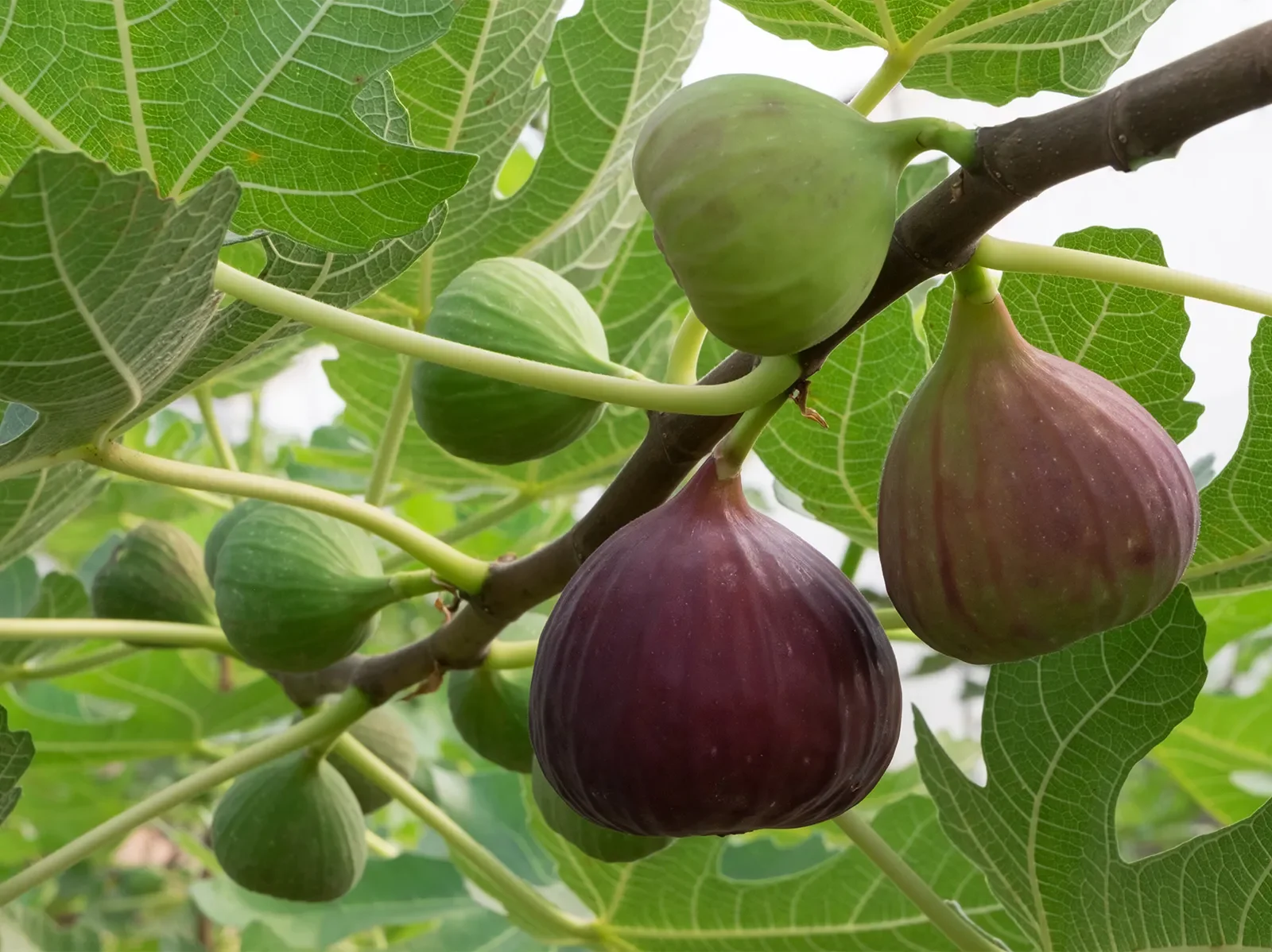
Ripening, photosynthesizing figs (Ficus carica)
Photo credit: korkeng/Fotolia
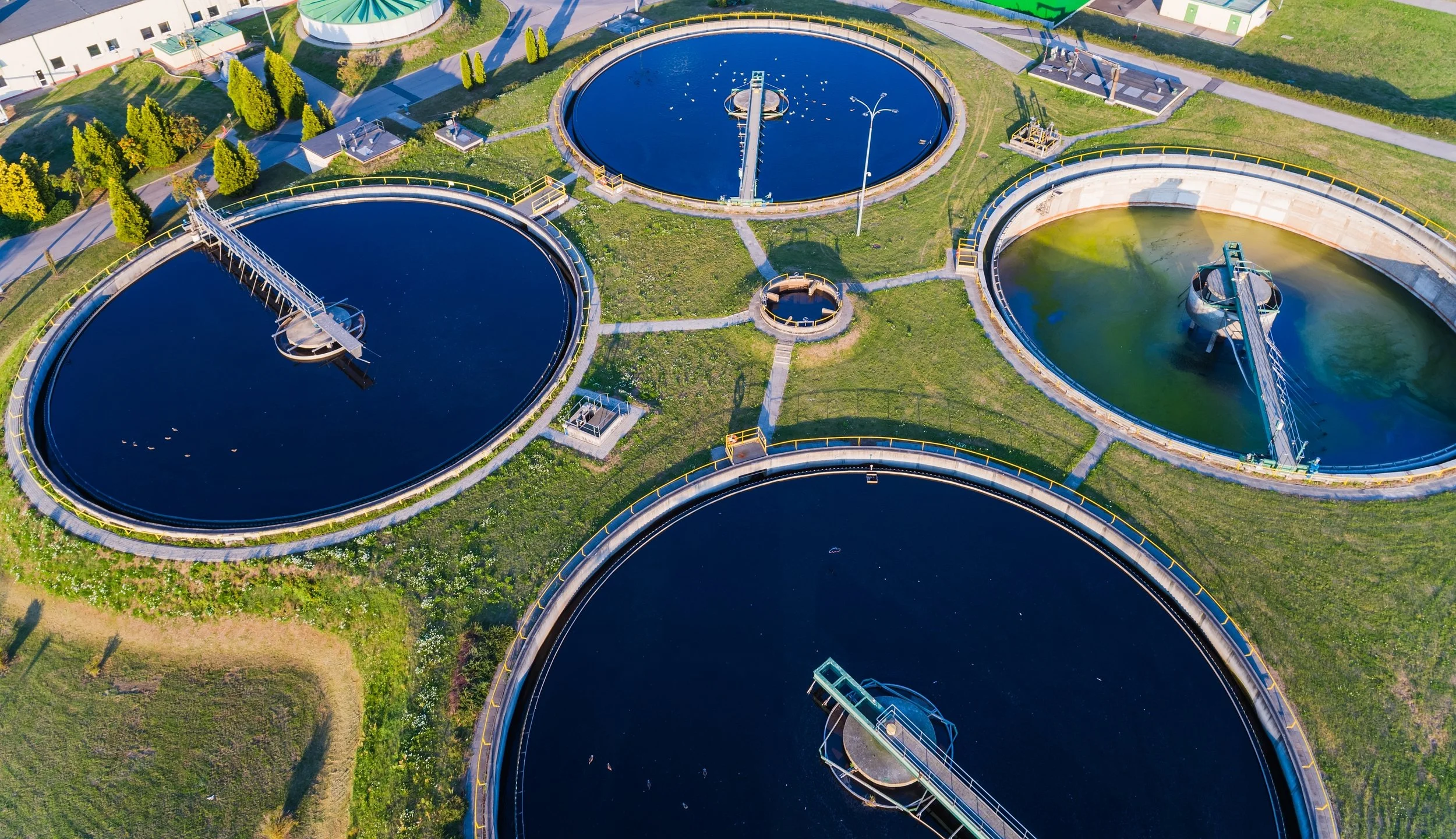
Municipal sewage treatment
Photo credit: American Water Security Project
GOING DEEPER
The conventional black box approach has served us well so far using the cow, figs and sewage examples. That’s all good, but there is obviously a lot more going on. Next, take students out of their comfort zones by asking:
For each of these systems, what goes in and what comes out?

The 8 planets of our Solar System orbiting the Sun
Image credit: Mark Garlick/Science Photo Library

Global Stock Exchanges
Photo credit: Adobe

Large scale Covid-19 vaccination center in China
Photo credit: South China Morning Post

Traffic jam on the 405 freeway in Los Angeles at rush hour
Photo credit: Patrick T. Fallon, AFP/Getty
Facilitating student responses
The Solar System is a very familiar dynamic system. Students will likely have more interesting things to say about the “ins-and-outs” of the stock exchange, vaccination center and rush hour traffic.
How do individuals and corporations—often striving for short term, monetary gain—give rise to sophisticated, global markets ?
How does the interplay between the single strand of RNA in a coronavirus, individual human immune systems, and government-enforced medical intervention, influence the epidemiology of a deadly global pandemic?
And, what is going on with Los Angeles traffic flow? Why is it so bad?
The recurring theme, of course, is the simplicity of individual components giving rise to collective sophistication. The black box perspective can provide a useful overview; but it cannot resolve the central question. It cannot tell us how emergent, self organized behaviors actually come about?
CLASS ACTIVITY Iii —
CLIMATE IS NOT WEATHER
Show this short video from The Economist. In fact, you should probably show it twice!
First set the scene by confirming that students understand that Earth/Biosphere/Gaia is recognized as a “closed system.” Hardly any matter (physical stuff/chemicals) enters or exits the planet; whilst energy flows freely in and out from space!
Organize the class into random pairs. Begin with the following warm up generative question:
What is the Albedo? How does it cool planet Earth?
When conversation dwindles provide each pair with a sheet of blank paper. Allow a timed 5 minutes for each pair to produce a succinct handwritten, signed response to the following question:
How would you explain the difference between weather and climate to an curious 8-year-old?
Still working in pairs, conclude the hypercomplex and interconnected class activities with a student volunteer reading the Melanie Mitchell definitions of a complex system. End with this third, and final, Economist video question:
The Economist video concludes by declaring that “for now climate change is feeding on itself.” What does this mean?
How does it play into our burgeoning understanding of Systems Thinking?
“1. A system in which large networks of components with no central control and simple rules of operation give rise to complex collective behavior, sophisticated information processing, and adaptation via learning or evolution.
2. A system that exhibits non-trivial emergent and self-organizing behaviours.”

Fungal mycelium underground network
Enhanced composite image credit: Ananda Chaga, Canada