
President Donald Trump “oversees” Operation Epic Fury at Mar-a-Lago, Palm Beach, Florida. March 1, 2026.
Image credit: White House photo by Daniel Torok
COMPLEX — ADAPTIVE — NO CENTRAL CONTROL
In our introduction to the Human Sciences as an Area of Knowledge, we asked “What could be more complex and daunting than our attempts to study human existence and behavior?” We acknowledged that the human sciences are hypercomplex and they—rather than physics and chemistry— could be referred to as “the hard sciences.”
The Human Sciences encompass Psychology, Social and Cultural Anthropology, Economics, Global Politics, Geography, and Environmental Systems and Societies. All of these IB subject domains have a distinct flavor, but there is considerable overlap. A family resemblance is that they all necessitate a holistic, systems thinking approach.
In biology there is a hierarchy of organization with complexity at every level. We can view cells, organisms, and ecosystems as energy hungry, complex adaptive systems—changing to stay the same!
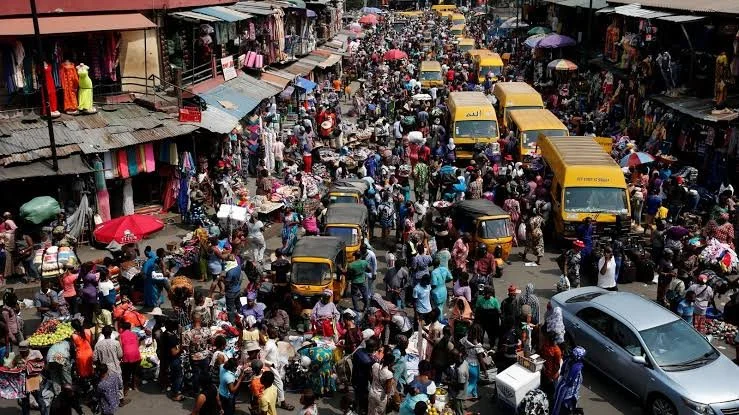
Systems thinking is also essential for understanding the interconnectedness, and inherent messiness, of global events as they play out in front of us. Time and scale are critical factors that often get in the way. Human endeavor is fraught with unintended consequences—so often only revealed with hindsight or historical perspectives.
“So, what is a system? A system is a set of things—people, cells, molecules, or whatever—interconnected in such a way that they produce their own pattern of behavior over time. The system may be buffeted, constricted, triggered, or driven by outside forces. But the system’s response to these forces is characteristic of itself, and that response is seldom simple in the real world.”
MENU OF CLASS ACTIVITIES
Systems Thinking for TOK teachers
The Santa Fe Institute
“Introduction to Complexity”—always available, free, online class
Two book recommendations
Systems Thinking and IB curriculum development
The ‘why’ of systems thinking
The ‘now what’ of transformative change
Hypercomplex and interconnected
No central control!
Revisit holism and reductionism
Black box systems approach
Complex systems brief encounter
Climate is not weather
Army ant superorganism
Ant colony simulation
Why is a living cell like Paris and not like Paris?
Consilience of Knowledge
Is there a hierarchy of Areas of Knowledge?
Parable of the blind men and an elephant
Poetic reading
Pachydermal caricature
Epistemic bubbles
Synergy
Denizens of Plato’s Cave revisited
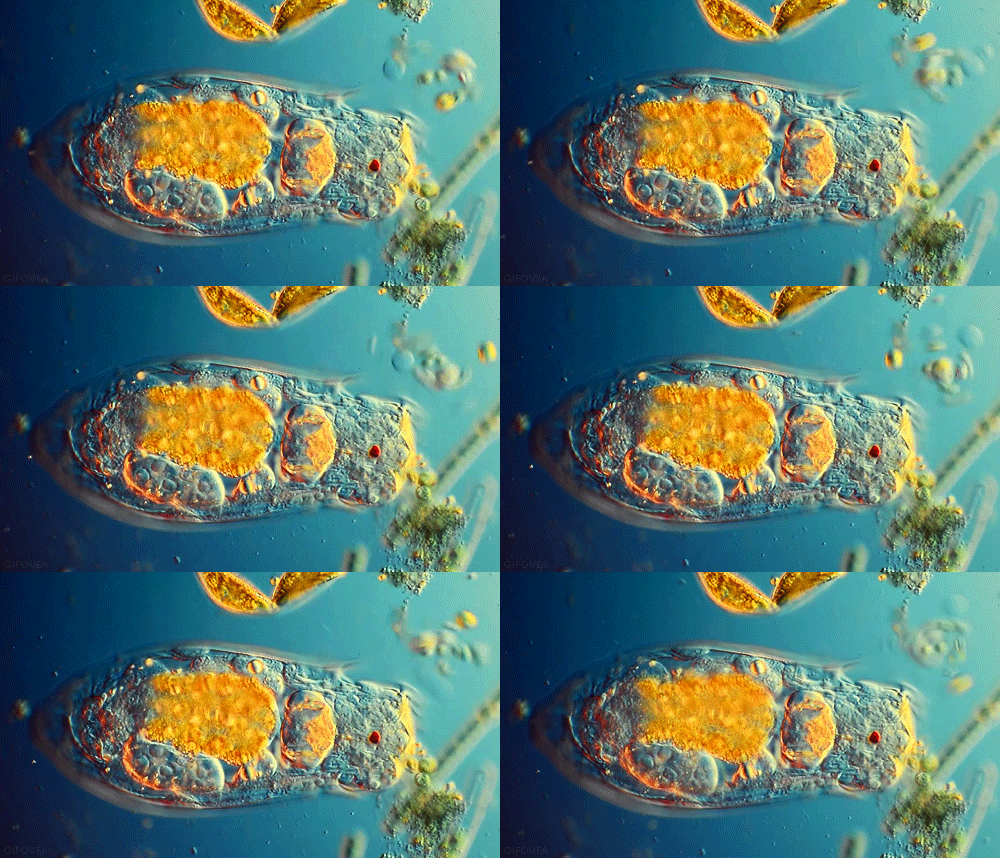

Rotifers are microscopic freshwater animals. They are complex, adaptive, energy-hungry, living systems. Each species has a fixed number of about a thousand cells—25% are nerve cells!
Image credit: Giphy