AREAS OF KNOWLEDGE:
THE ARTS
AI ART
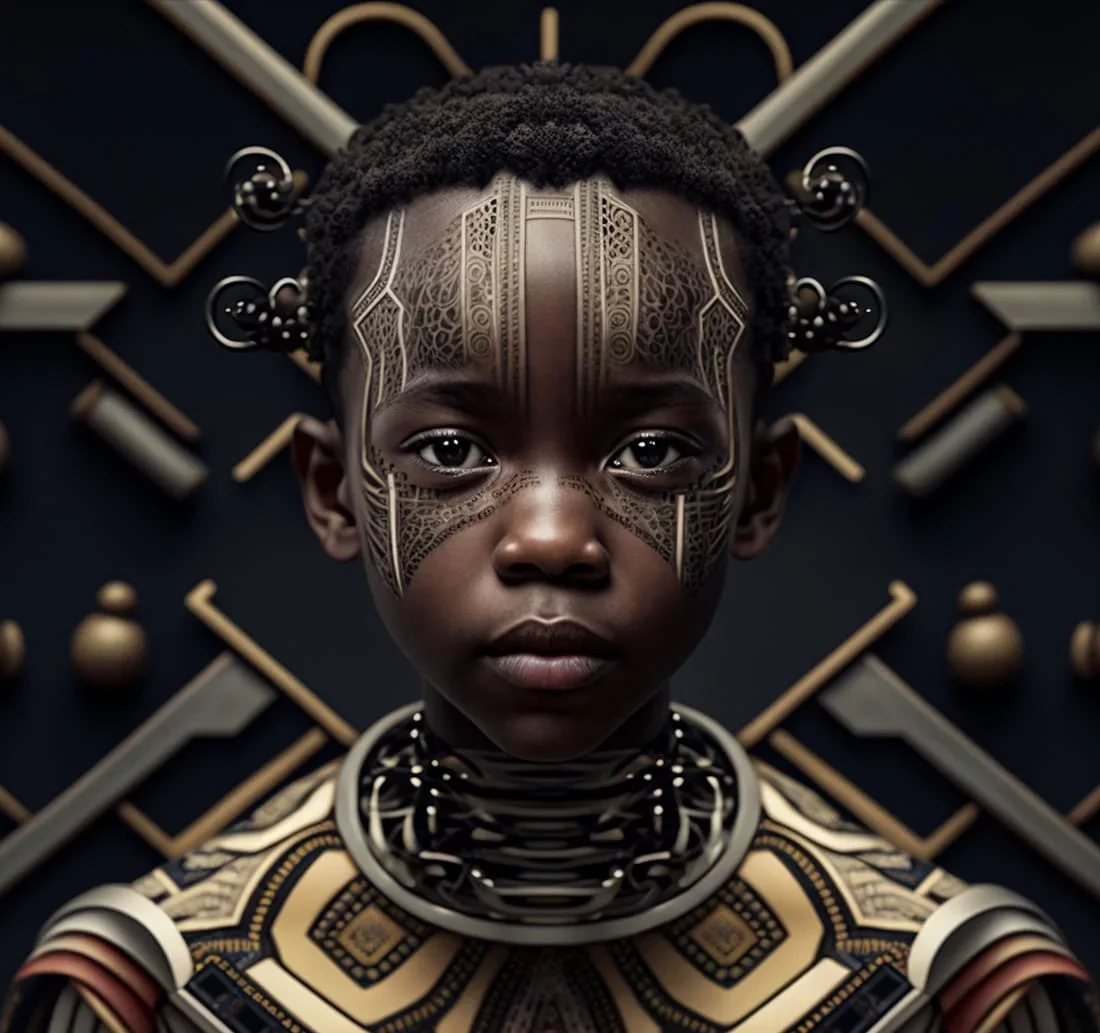
AI-generated Resident of the futuristic city of Ngochola by Nigerian artist Malik Afegbua, who states that “AI is reshaping the world — but who shapes the AI? I believe in building technology that centres African voices, respects cultural heritage, and confronts bias at its root.”
CLASS ACTIVITY I —
CREATE YOUR OWN IA ART
Jump right in! Without any context or initial discussion, organize the class into random pairs—each with an open laptop at the ready. Invite the class to visit the Magic Studio IA Art generator and have them spend a few minutes creating their own artworks using words alone!
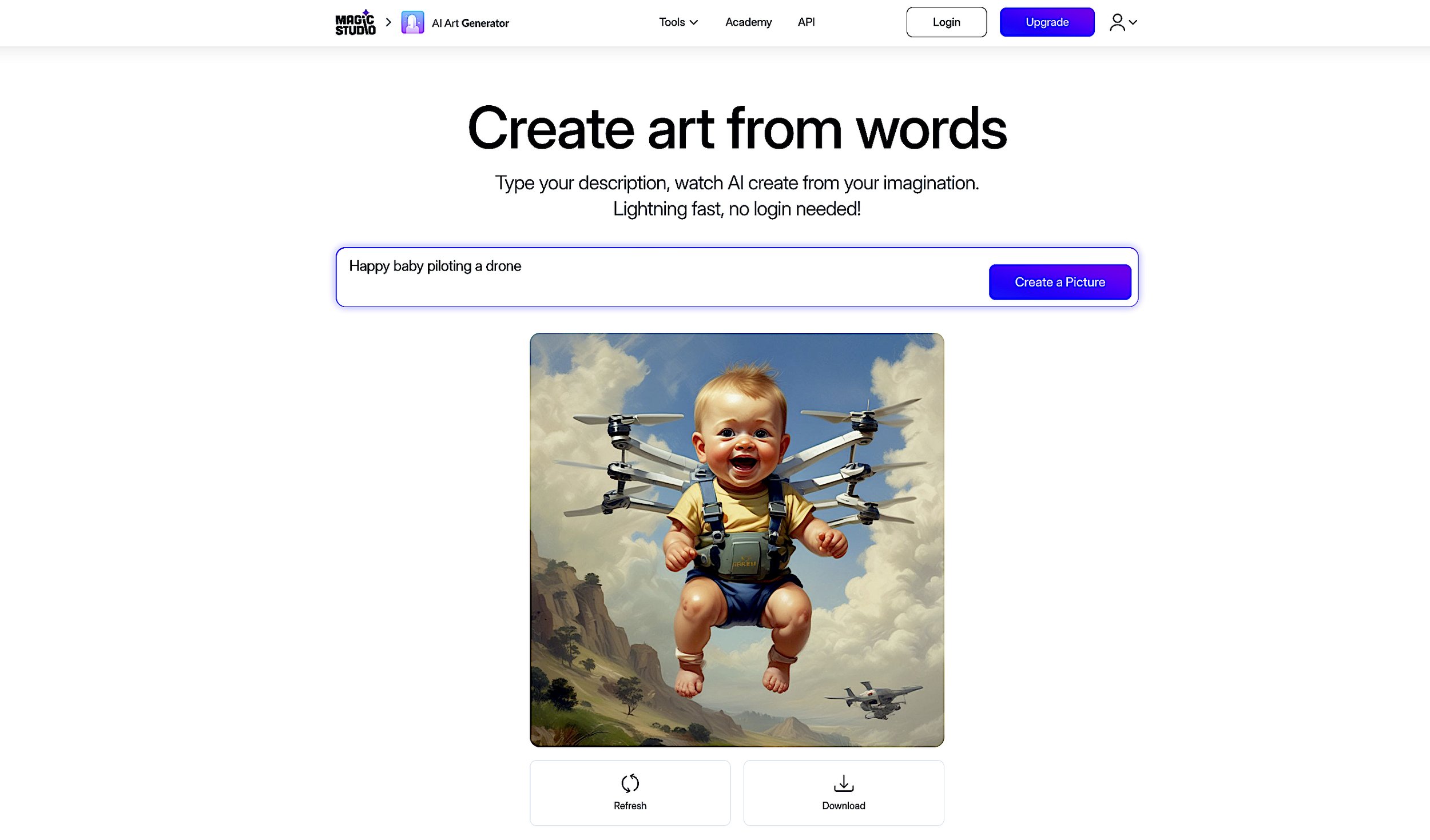
Magic Studio works well in the classroom because it is free, instantaneous, and requires no login or personal info. And, if any inputs are deemed offensive by the algorithm—a blank, black screen appears without comment.
Tell students that they should limit their interactions to typing in descriptions, pressing the “Create Picture” button, and using “Refresh” to generate variations. They should resist the temptation to get distracted by navigating other features of the site.
Given these constraints, invite students to freely explore the program for a timed six minutes. Invite them to delve in—not shying away from surreal imaginative flourish, oddball whim and wacky humor!
After five minutes—give a one minute warning. Tell students that each pair must leave an image, with its description in place, on their laptop for all to see. The whole class will slowly walk around the room and appreciate the AI renderings as they would when visiting an art gallery. When the dust settles, have everyone return to their seats, and unleash class discussion by asking with a smile:
What just happened?
CLASS ACTIVITY II —
VARIETIES OF FRONTIER AI ART
This next activity is a close encounter with a selection of frontier AI Art. Lead an unhurried exploration of all the exemplars set out below. The intention is to grab students’ attention and widen their perspective. Allow comments and provide clarifications. But if big meta-questions arise: save them for the deeper dive in the concluding activity.
Begin by reminding students that, in The Value of Art unit, we had all been bemused by Edmond de Belamy — the AI portrait that sold for $432,500 at Christie's in 2018. Recall that the work’s signature was the algorithm that produced it:
min G max D x [log (D(x))] + z [log (1 -D (G(z)))]
Next take a look at the Alan Turing Portrait rendered by the physically embodied robot Ai-Da in 2024.
Now contrast Ai-Da with this Automaton at the Franklin Institute, created two hundred years ago by Henri Maillardet!
Next, take a deep breath. Here come the astonishing Niceaunties!
As 2026 begins, Refik Anadol may be the most famous and critically recognized AI artist in the world. He creates monumental public installations using massive datasets.
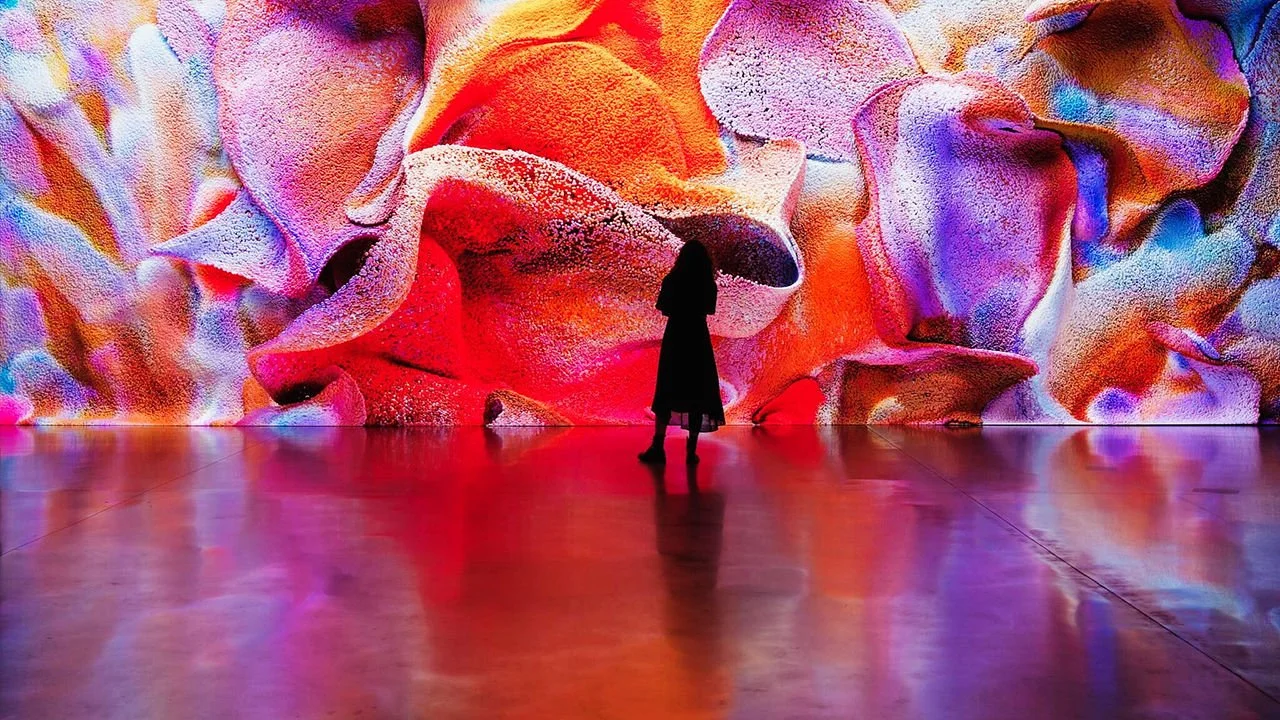
Photo credit: Refik Anadol Studios. February 20, 2024
Students should take a few minutes to visit both the Refik Anado and the Dataland websites. Dataland is the world's first dedicated AI Art Museum. It will open in the Spring of 2026 under Refik Anado’s artistic leadership. The banner video of the Dataland homepage is dazzling!
By contrast here is an mind-bending, short-form video referencing surrealism by Kelly Boesch
Here is some historical light relief—the iconic Lava Lamp from the swinging sixties! Is it good art or nostalgic kitsch?
Here are some AI renderings by David Szaunder based on The Garden of Earthly Delights by Hieronymous Bosch (1500-1505). David Szaunder’s Instagram is chock full of mesmeric IA-generated dance shorts.
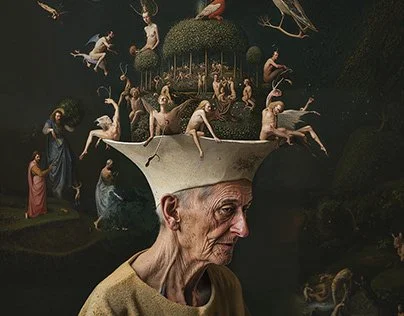
From The garden of my early delights by David Szaunder - posted on Beēhance.
Finally, assimilate this perspective from Hungarian artist Mario Klingemann, an early pioneer of AI Art.
CLASS ACTIVITY III —
IS IT ART?
AI Art is the last of nine units in The Arts as an Area of Knowledge. By now students will recognize that, as with almost all human endeavor, the Arts are complicated, and are constantly evolving. The question: What is Art? has never been easy to pin down. Like all landmark technical innovations in Art evolution—think: fresco replaced by tempera and oil paint, printing, photography, film, digital imagery—AI has changed the frame!
“If you hear somebody playing a piano,
would you ever ask: is the piano the artist?
No!
So... same thing here.
Just because it’s a complicated mechanism
it doesn’t change the roles. ”
“Generative A.I. art is vampirical—feasting on past generations of artwork...” ”
AI Art — still very new, and not one thing!
Get things started with public readings of the Klingeman and Crabapple quotes; then get to grips with the arguments expressed in the “When AI becomes a paintbrush, is it art?” video.
Divide the class into four discussion groups called “Lava Lamp,” “Automaton,” “Unsupervised,” and “NiceAunties.” Each group should appoint a Facilitator, a Scribe and a Reporter. Groups will tackle three common questions and one unique question (unseen by the others).
Three Common Questions:
To what extent did you feel like you were real artist when you were making AI Art using the Magic Studio AI Art Generator?
Should artists fear being replaced by AI Art? If not, why not?
What kind of datasets do you think were used to train sophisticated IA art models like Midjourney, DALL-E 3 and DeepSeek Janus-Pro?
Lava Lamp group only:
Is there any meaningful difference between Henri Maillardet’s Automaton and the AI-Dai robot?
Automaton group only:
In 2023, after seeing Refik Anadol’s Unsupervised show at MOMA in New York, art critic Jerry Saltz called it ”a glorified Lava Lamp!” To what extent, if any, is his criticism justified?
Unsupervised group only:
What are the commonalities and differences between NiceAunties and your own experience using the Magic Studio AI Art Generator?
NiceAunties group only:
Why do you think art critic Jerry Saltz is careful to make a distinction between ”AI Art” vs. “Art that uses AI”?
CODA—WHATEVER NEXT?
AI Art is still very new.
It is certainly not one thing!
Now that it has been unleashed—
Will there be unforeseen consequences?
Close the class by calling for a moment of silence. Then end with: “this is where the story stops this time… no, really. That’s i…”
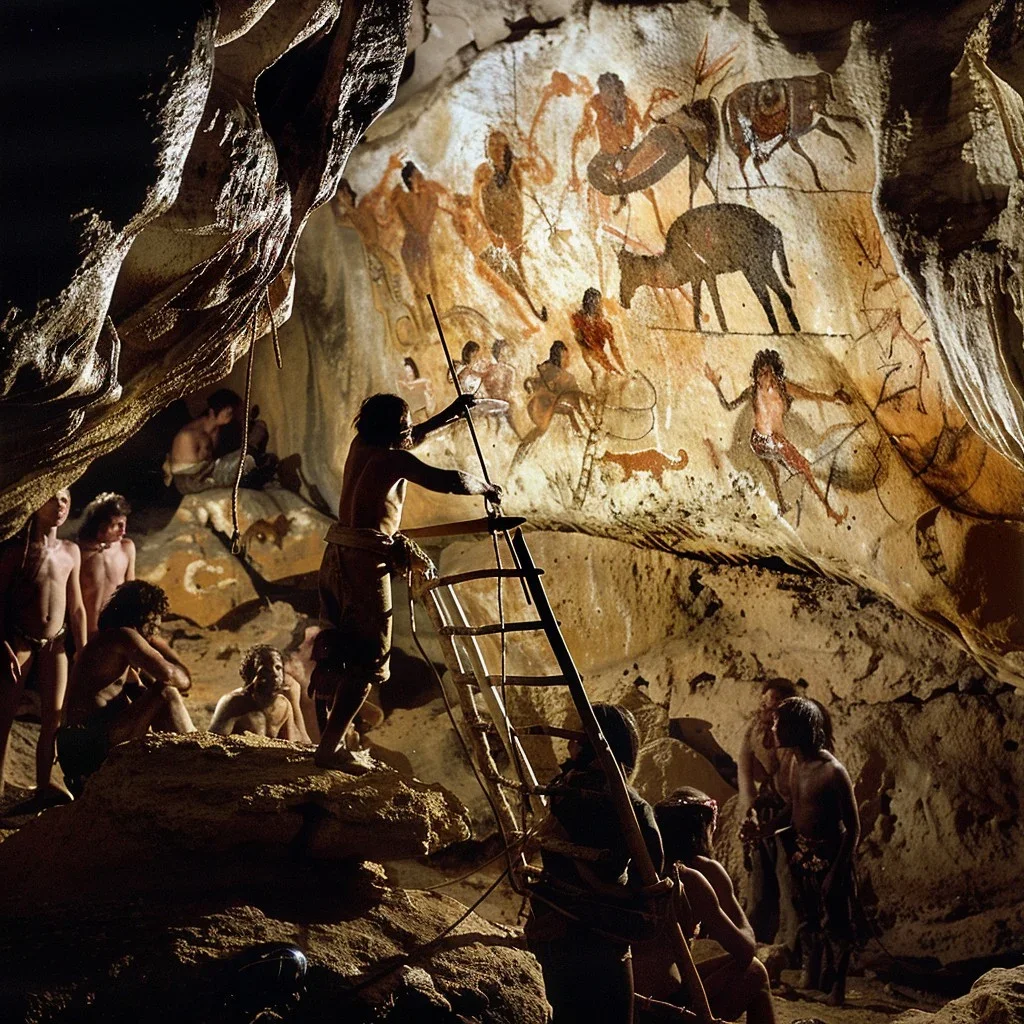
What is this exactly? You decide…