
AREAS OF KNOWLEDGE:
THE ARTS
WHAT ABOUT athletics?
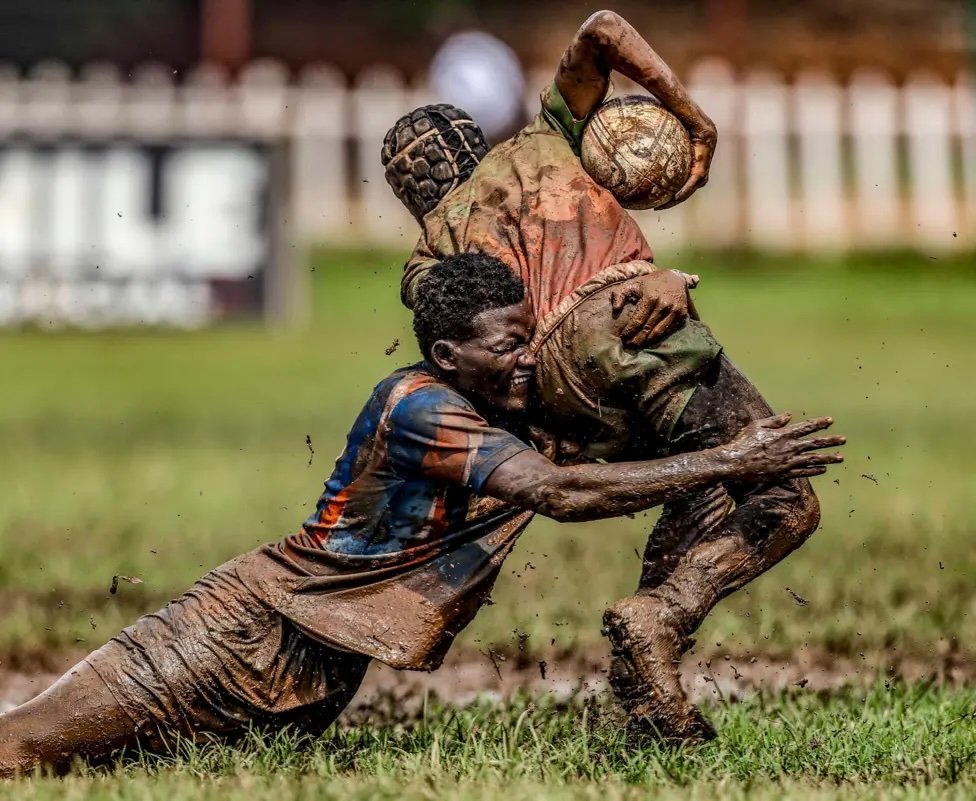
Rugby in the Mud by Hassan Omar Wamwayi
Children in Kyadondo, Uganda play rugby after the rain!
World Sports Photography Award winner 2025, BBC Sport.
SPORTS AND EMBODIED KNOWING
There is some overlap between athletic participation and the performing arts. Ballet dancing, circus acrobatics and Taiko drumming exemplify this.
In the Knowledge and Knower core theme, at the start of the TOK course, we explored the factors that come into play when learning to ride a bicycle. We grappled with balance, proprioception, and muscle memory. We recognized the distinction between Knowing that and knowing how.
Later, in the Language games activity, we had fun inventing games from scratch and brainstormed resemblances between sports and games.
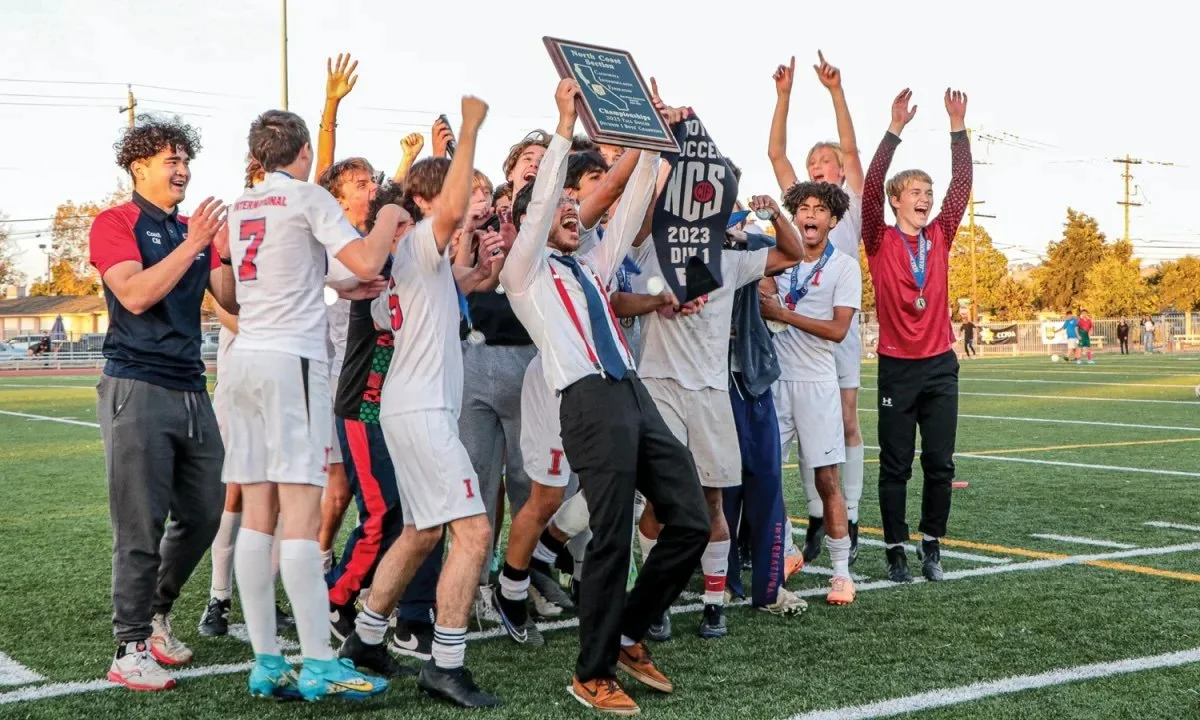
International High School of San Francisco Varsity Soccer Team moments after a recent cup final victory!
(Full disclosure—the author of this website taught TOK at this school for 32 years!)
Athletes are physically active human knowers. They are embodied, culturally-embedded, technology-augmented, smart apes!
Athletes are “mind on the hoof”—alert and primed for skillful action in the moment. In the Squidgy, pinkish, buttery gloop class activity we discovered that most of our brain activity is about interacting with our environment and fine tuning control of our complex bodies for survival.
WINNERS AND LOSERS
Most games have rules and eventual winners and losers. Sportsmanship and fair play are a subset of ethics. Most human endeavor is subject to constraints. Metaphorically, we prefer playing tennis with the net up.
CLASS ACTIVITY I —
Let’s DANCE!
Arrrange the class in random pairs. Begin the session by showing Alysia Liu winning the 2026 Winter Olympics ice dancing gold medal in its entirety. Ask the conversation partners to respond to the following questions. Spell out that questions are phrased abruptly but invite nuanced clarification!
Is classical ballet an art form?
Is competitive ice dancing an art form?
Is dance an athletic activity?
Take a few moments for some whole class discussion. Next combine the pairs into fours. Arrange furniture accordingly. Take a deliberate constructivist approach by asking the groups to address the following generative questions. Allow exactly six minutes.
List the sports and games that you play.
Are you a sports fan with loyalty to any specific teams?
How would you characterize your own relationship to sports, physical activity, online gaming etc.?
Are there any meta-questions about sports and games that you would you like to explore in this unit?
When time is up, ask groups to share any emergent questions and write them on the white board (take a photo for future reference).
PLAYFUL PHYSICAL WARM Up
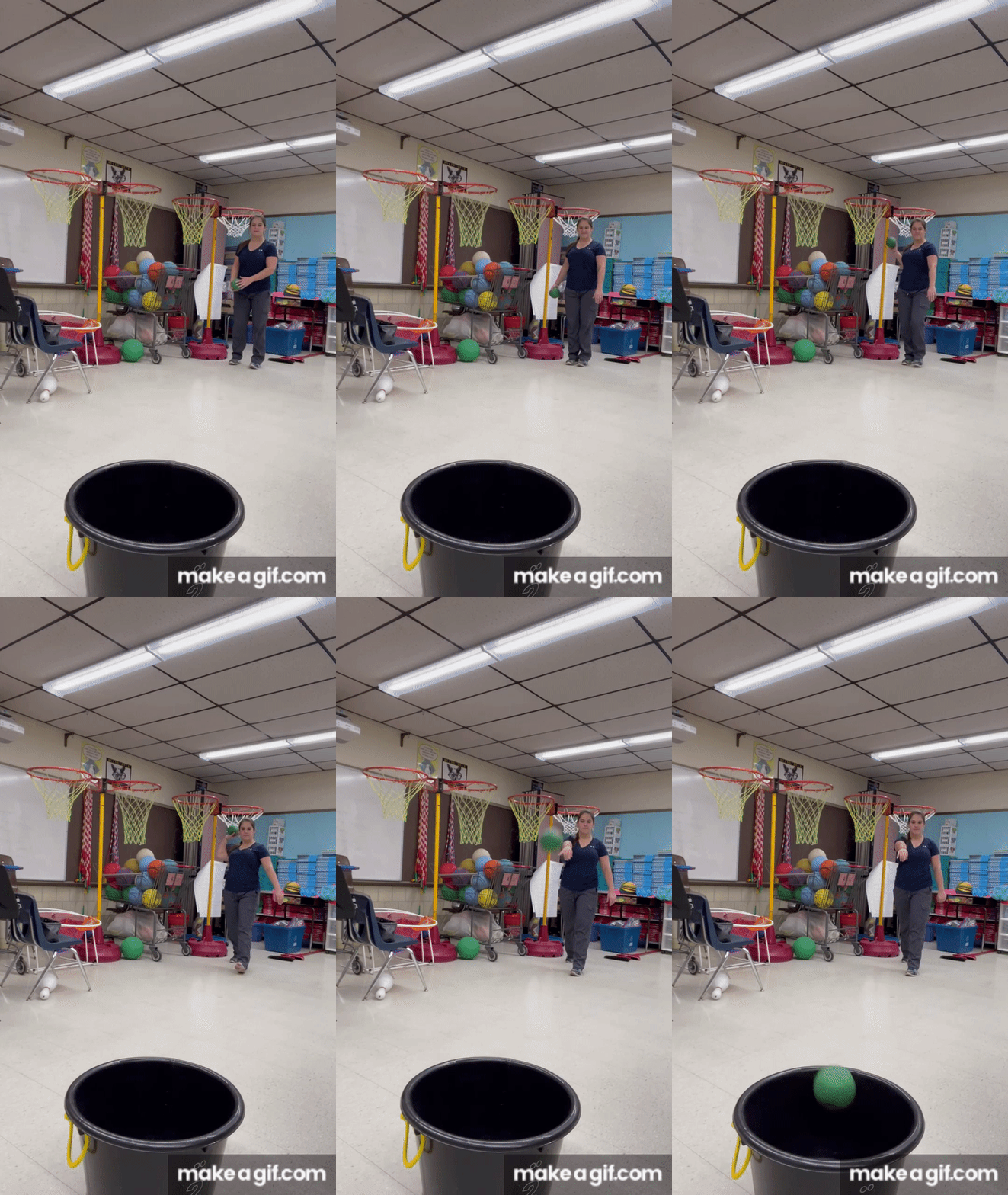
Invent a simple ball in the bucket competition that works for your classroom. Depending on your bandwidth; bean bags and a strong bucket work best. If not whiteboard markers and a trash can will suffice! The entire class will participate. Ask a student volunteer to create a single elimination tournament grid on the whiteboard. Have small prizes on hand for semi-finalists and finalists.
ATHLETIC RITUAL — THEN AND NOW!
Next, everyone should return to their seats.Project this series of historic, athletically-themed images that have been curated chronologically. Utilize the detailed captions to provide context. Invite comments as you go. The three generative questions in the end may, or may not, be necessary to unleash lively class discussion.
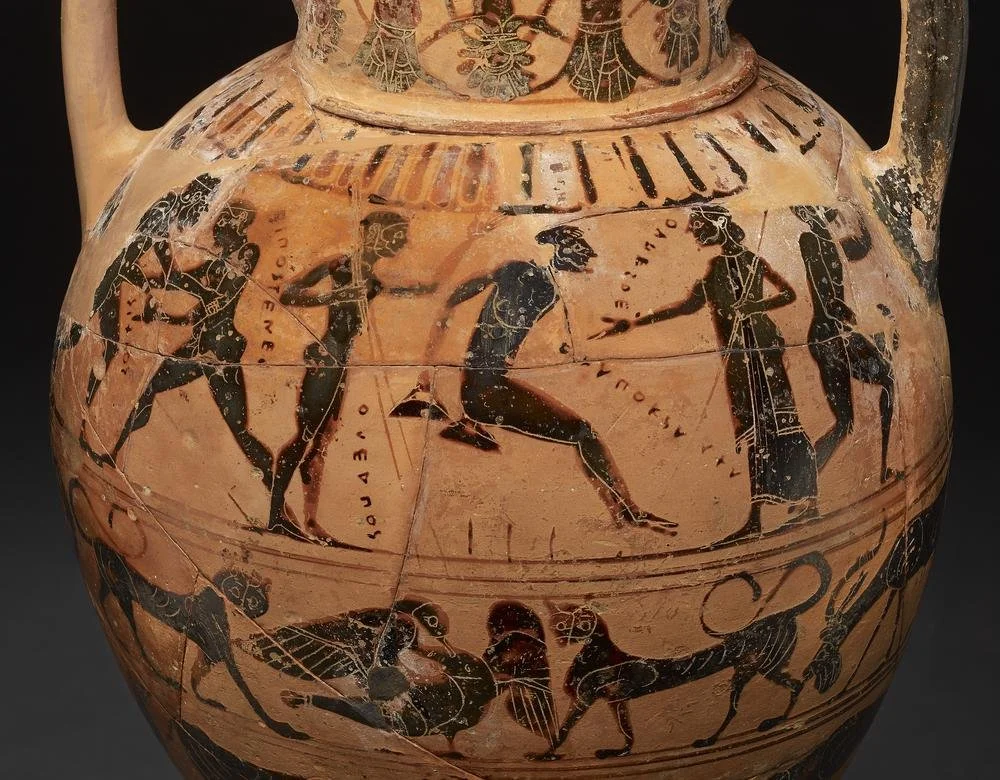
Winning at the ancient Greek games
A competitor in the long jump in the center, with athletes wrestling to the left. Tyrrhenian amphora, 540 BC. British Museum.
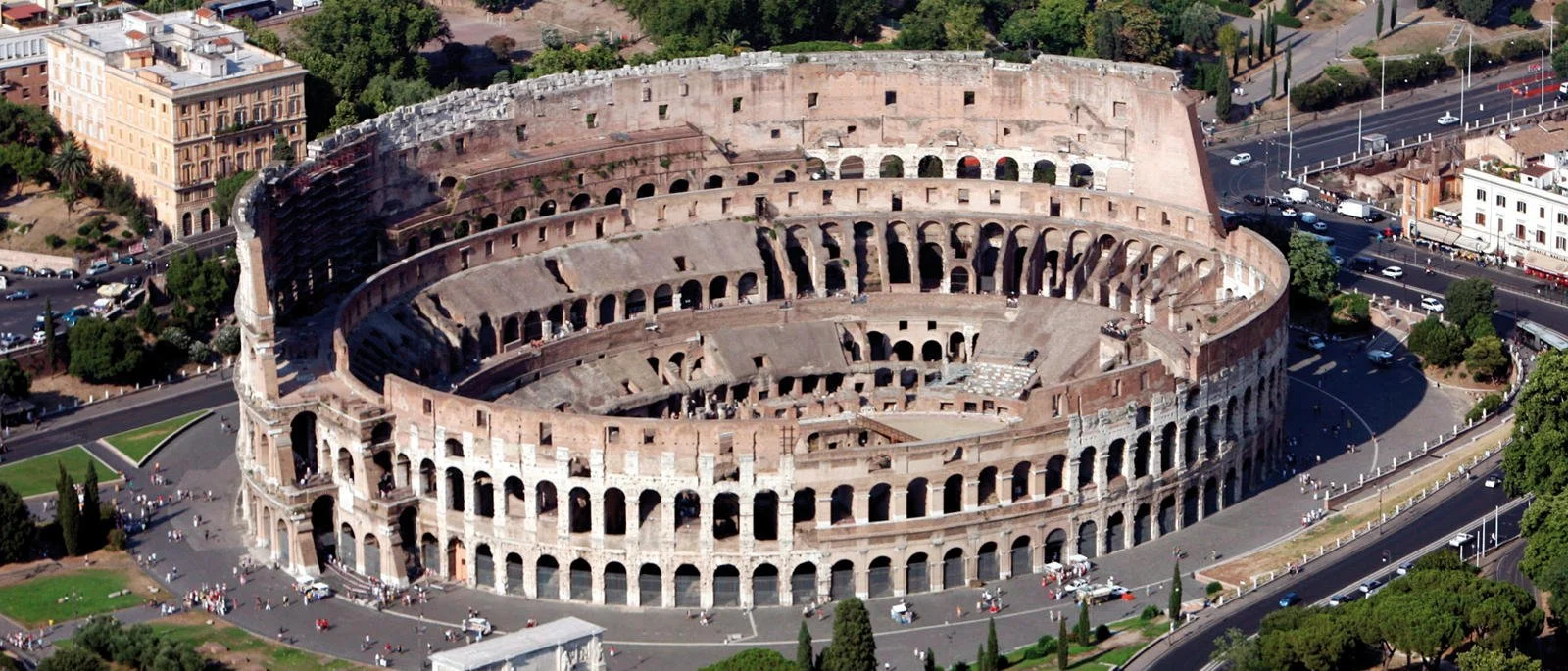
The Roman Colosseum—the largest amphitheater ever built.
Its construction began under the emperor Vespasian in 72 BAD and was completed under Titus in 80 AD The Colosseum was used for gladiatorial contests, animal hunts, executions, re-enactments of famous battles.
Photo credit: Vision Roma
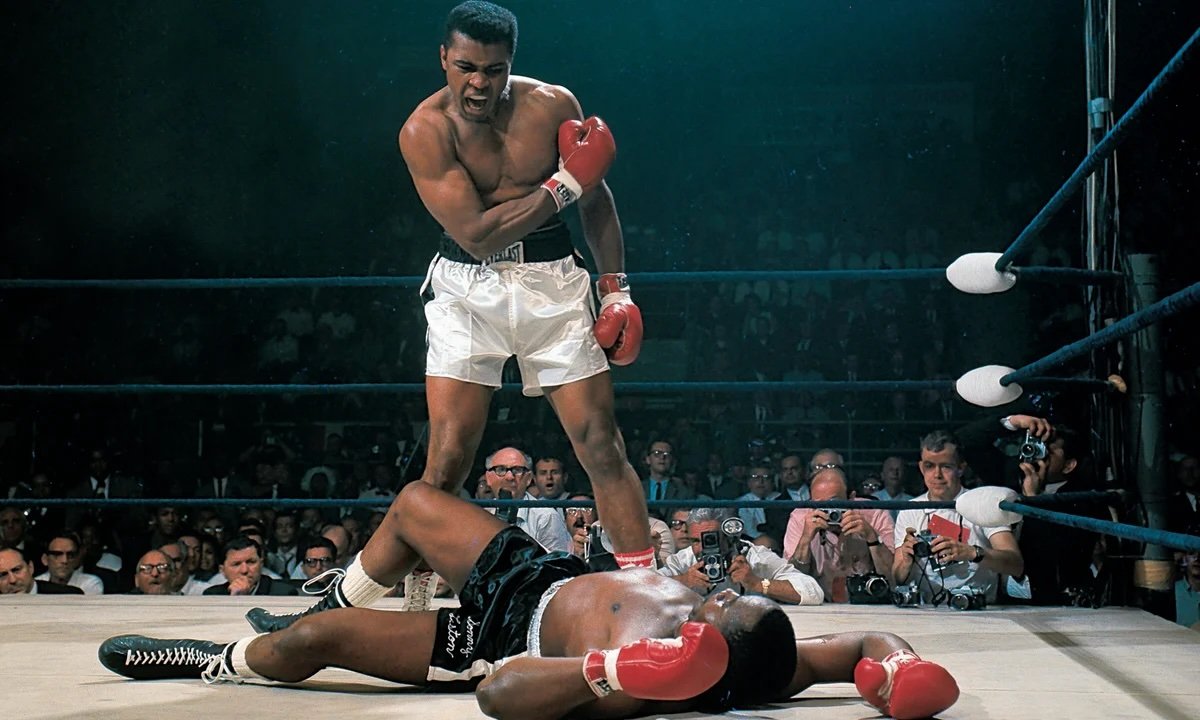
Muhammad Ali knocks out Sonny Liston in the first round of the heavyweight championship in Lewiston, Maine, 1965.
Photograph: Neil Leifer/Sports Illustrated

USA's Lolo Jones was favored for gold in the women's 100m Hurdles at the 2008 Summer Olympics in Beijing. Lolo stumbles at the final hurdle and takes 7th place.
Photo credit: Al Tieleman
Generative questions
To what extent do you agree with George Orwell’s assertion that "serious sport is war minus the shooting”?
What was the motivation for the gladiatorial entertainment put on in the amphitheaters of ancient Rome?
Are e-sports real sports?
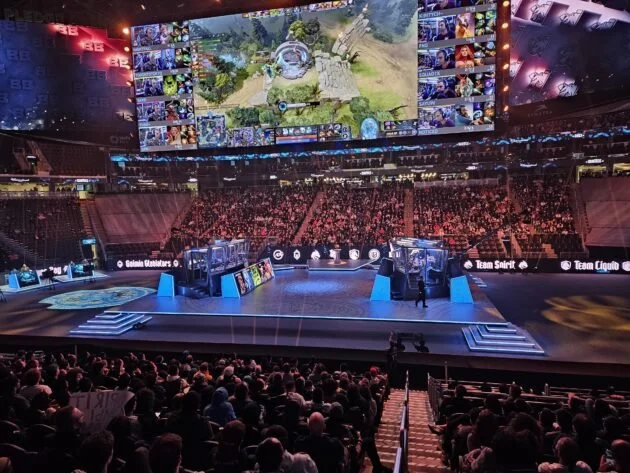
2023 international esports tournament in Seattle using the multiplayer, online battle arena Dota 2.
Photo credit: GeekWire/Thomas Wilde.
CLASS ACTIVITY II —
TRIBALISM AND RITUAL
In the Knowledge and Religion optional theme we encountered the powerful feeling of belonging that comes with group participation in sacred rituals. Echoes of this sense of identity and fellowship can be found in Knowledge and Indigenous Societies, as well as Knowledge and Politics.
Now let’s look at tribalism and ritual in the sporting context. Show the class these two charismatic and moving videos.
CODA—
THE NARCISSISM OF SMALL DIFFERENCES
End this unit by asking a student volunteer to read Christopher Hitchin’s quote. Then get some class discussion going by asking:
How does the narcissism of small differences play into competitive sports and tribal rivalry in other hman contexts?
Who can tell us something about the Greek legend of Narcissus?
What is the difference between the Judean People’s Front and the People’s front of Judea?
“In numerous cases of apparently ethno-nationalist conflict, the deepest hatreds are manifested between people who—to most outward appearances—exhibit very few significant distinctions. It is one of the great contradictions of civilization and one of the great sources of its discontents, and Sigmund Freud even found a term for it: “the narcissism of the small difference.” As he wrote, “It is precisely the minor differences in people who are otherwise alike that form the basis of feelings of hostility between them.”
”
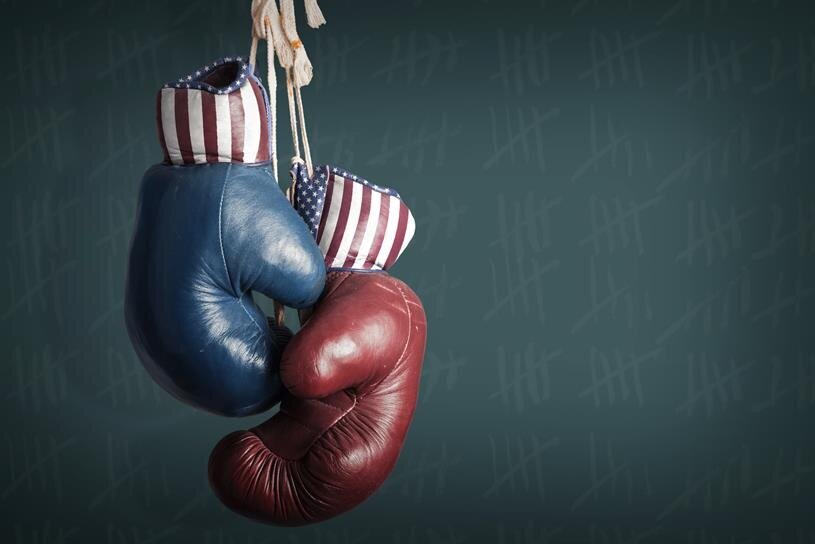
Photo source: I-Hsien Sherwood: The art and science of negative campaign ads. CampaignUS, July 25, 2016.