OPTIONAL THEME:
KNOWLEDGE AND TECHNOLOGY
HOW TOK CAN BREAK THE DIGITAL 4th WALL
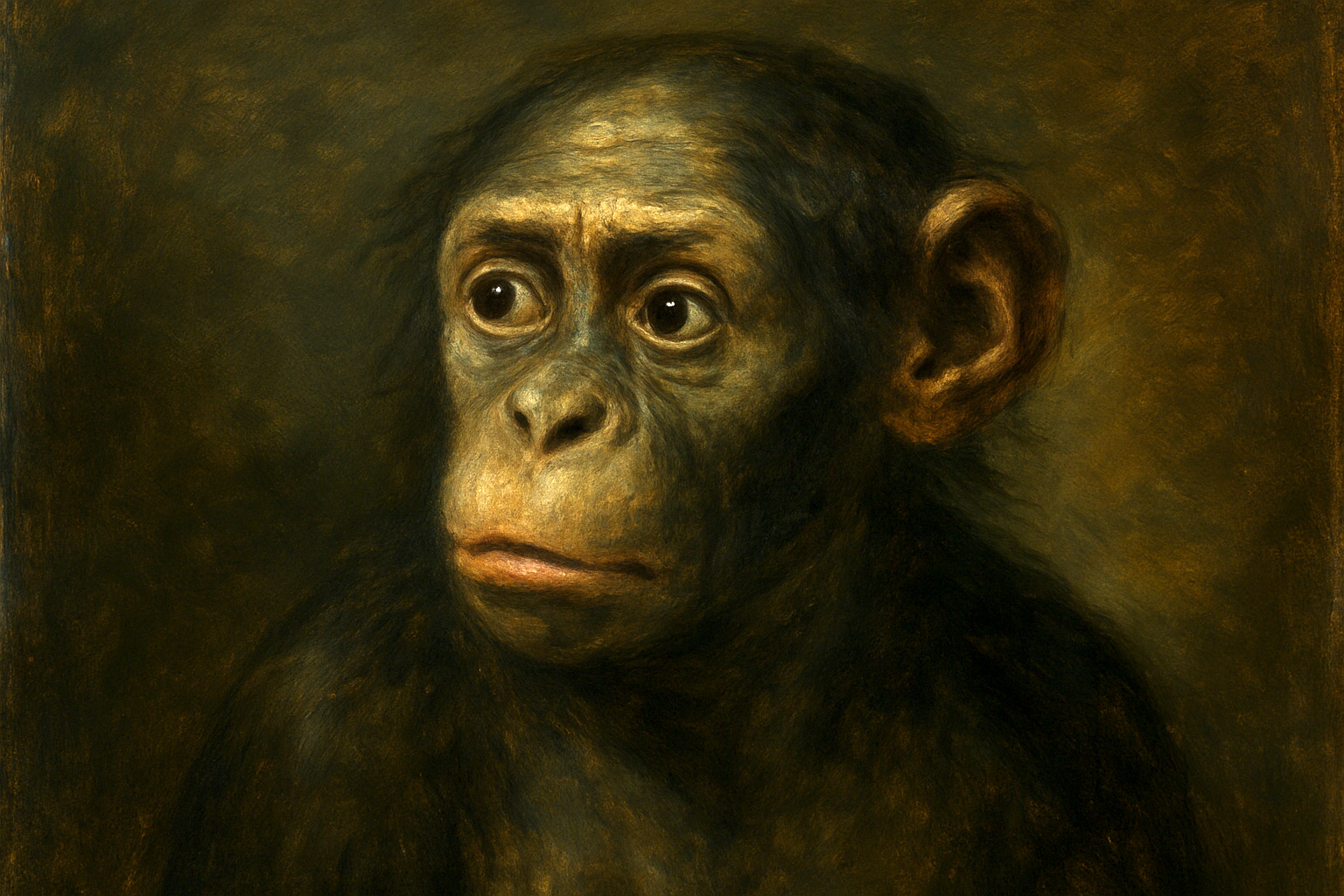
Bonobo in the style of Goya generated by AI
Post-truth has certainly muddied TOK waters. Personalized, bot-amplified social media bubbles and partisan echo chambers have made it even more difficult for TOK students to discern the difference between good and bad interpretations, and to avoid the pitfalls of “anything goes,” outright relativism. The sheer volume and mesmerizing rapidity of extreme, polarized viewpoints, has made it even trickier for TOK students to embrace the value of multiple perspectives and maintain a pluralistic, international mindset.
Meta-cognition provides a partial antidote. Zooming out to obtain some critical distance on how the internet really works, can deliver new levels of agency and instrumentality. The realization that, like most humans on the planet, you are going about your distracted digital life, oblivious to the fact that you are hostage to the AI-enhanced, algorithmic business models of tech companies, can be a personal, cognitive game changer—an epiphany that shatters the digital 4th wall.

Rodin’s The Thinker in The Gates of Hell at the Musée Rodin, Paris.
CLASS ACTIVITY: KNOW THYSELF
Caring about Truth and getting down to the facts is always challenging. Acknowledging the manipulative business models of the, non-subscription, giant tech companies, and the tendency for LLMs to hallucinate, should be combined with some honest self-reflection.
Critical vigilance and self-knowledge make all the difference. Question what routinely distracts you and learn to recognize what sucks you in. What things monopolize your attention and blunt your thinking, time after time, after time… after time!
How would you characterize your overall relationship to social media? Is it healthy. Is it honest?
What are your confirmation biases?
Overall, are your digital routines and habits good or bad for you and the world?
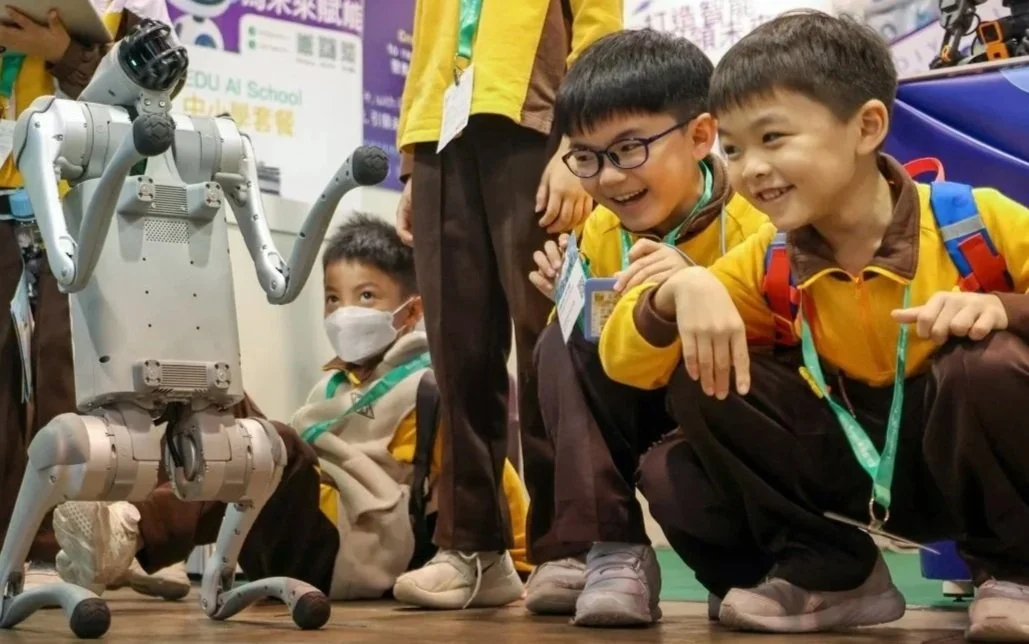
Photo Credit: South China Morning News: June 25, 2025.
LOOK NO FURTHER — TOK AIMS
Since 1968 TOK has empowered IB Diploma students to ask big questions; evaluate knowledge claims; and get to grips with multiple viewpoints.
In the current era of post-truth and AI ubiquity, the TOK quest retains its signature centrality and relevance. Take a moment to reflect on the TOK Aims—extracted verbatim from the 2022 TOK Subject Guide. They merit a close reading. The selections in bold font screech with urgency!
To encourage students to reflect on the central question, “How do we know that?” and to recognize the value of asking that question.
To expose students to ambiguity, uncertainty and questions with multiple plausible answers
To equip students to effectively navigate and make sense of the world, and help prepare them to encounter novel and complex situations
To encourage students to be more aware of their own perspectives and to reflect critically on their own beliefs and assumptions
To engage students with multiple perspectives, foster open-mindedness and develop intercultural understanding
To encourage students to make connections between academic disciplines by exploring underlying concepts and by identifying similarities and differences in the methods of inquiry used in different Areas of Knowledge
To prompt students to consider the importance of values, responsibilities and ethical concerns relating to the production, acquisition, application and communication of knowledge.
KNOWING ISN’T EASY
Recently, the sheer volume of digital dross, clickbait, conspiracy theories, thinly disguised appeals to base emotion, mistrust of scientific expertise; and obfuscations like “alternative facts” and “deep fakes,” have made it increasingly difficult for TOK students to discern what is true. Complex and contentious issues have been reduced to rapid-fire, simplified soundbites. This makes it even more difficult to check contexts, sources and biases.
“Knowing isn’t easy. We have to know ourselves and the ways we think, and be thoughtfully critical of the conclusions we reach.”
INTERLUDE—
EDUCATIONAL PLOT TWIST
A non-negotiable plot twist for education as whole is looming. As teachers strive to deliver academic rigor across the various subject domains, we must embed AI and tech literacy, whilst—and this is key—retaining the human touch!
The IBO, and school systems all over the planet, are busy establishing coherent positions regarding age-appropriate use of AI that will augment skills in things like robotics, coding, algorithmic logic, networks, and IoT (Internet of Things). Digital citizenship must entail a critical approach to the chronic excess of information in a buzzing, post-truth world. Such a vision would also encompass cyber wellness and maintaining an ethical orientation when actually using information technology.
If we get this right; we will preserve problem-solving, meta-thinking, error detection, and the kind of meaningful, hands-on, real-world understandings that—at least so far—no external digital tool can fully replicate.
Long live the human touch!
CONCLUSION—
THE RAREST OF TREATS!
TOK can get a lot done in its designated 100 hours. Think of coming to TOK class as a rare treat. It is an opportunity to facilitate a cohort of energetic high schoolers to bond together and reflect, individually and collectively, on “the nature of knowledge, and on how we know what we claim to know.” It can be discombobulating for them at first, but what other class for 17-year-olds is “composed almost entirely of questions?”
In this digital, machine learning, anthropic era there is an imperative to increase the critical mass of informed, globally-minded, young adult citizens who have the meta-cognitive tools to navigate complexity, noise and obfuscation. We want students to learn to how to think for themselves, not confuse multiple perspective with outright relativism, and to care—really care—about the pursuit of Truth.
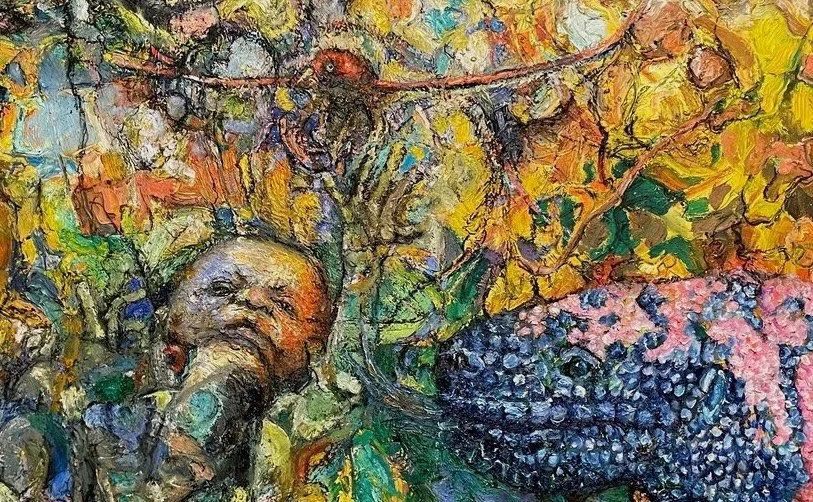
Benign neglect (2021) Oil painting by the author.